
Aurorasaurus Attends Space Weather Bootcamp!
Aurorasaurus intern Sean McCloat explains what he learned by attending an rigorous Space Weather Bootcamp at NASA’s Goddard Space Flight Center in Greenbelt, Maryland.
Aurorasaurus intern Sean McCloat explains what he learned by attending an rigorous Space Weather Bootcamp at NASA’s Goddard Space Flight Center in Greenbelt, Maryland.
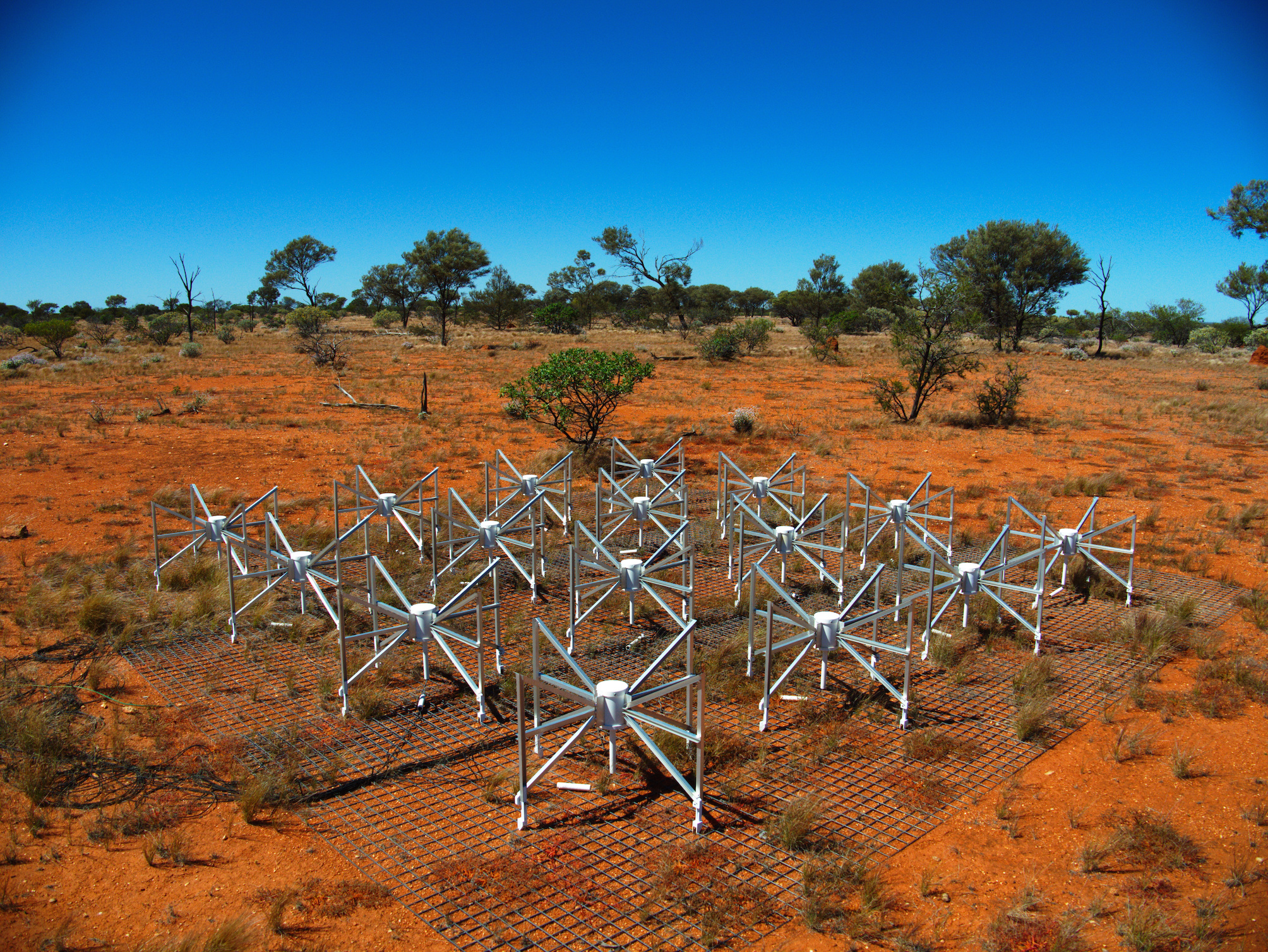
Radio astronomers are gearing up for a new generation of radio telescopes that will be based on radically new design concepts: a wide field of view and a high-fidelity snapshot capability. One such instrument is the Murchison Widefield Array (MWA), a radio telescope in the Australian outback. If such an instrument were to be built at high latitudes, it could provide a radio telescope’s view of auroral activity that could be used to forge a better understanding of what happens to plasma near the Earth during an auroral display.
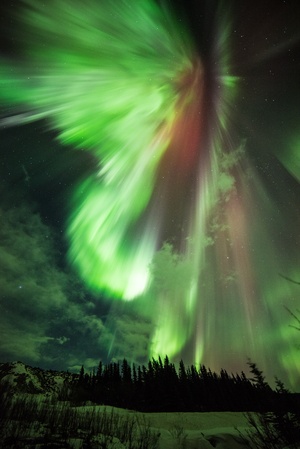
We are excited to launch our new quiz tool, available through the Learn section of the website. Each quiz will feature questions designed to test your knowledge of aurora and Aurorasaurus. You can earn 100 points for passing a quiz! You may already be an aurora expert. But in case you’re not, we’ve included explanations… Read More »Test Your Knowledge with our quizzes!

No two views of the aurora are identical. That is one of the reasons why we like to hear your reports during an aurora. This infographic addresses why the colors may be different when the aurora is overhead rather than on the horizon.
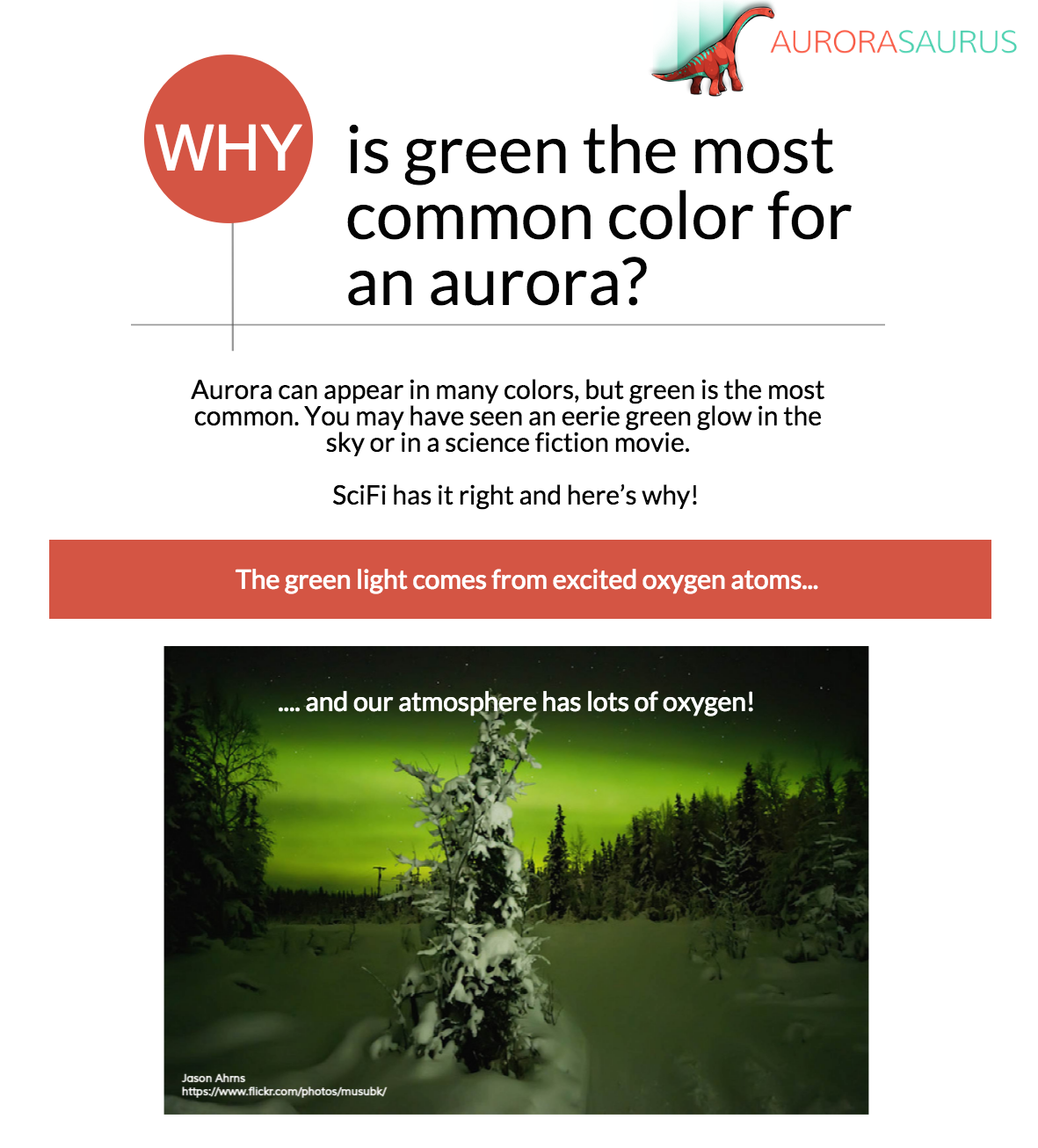
Green is the most common color for an aurora. Do you know why? Check out this infographic to learn why green dominates the aurora.
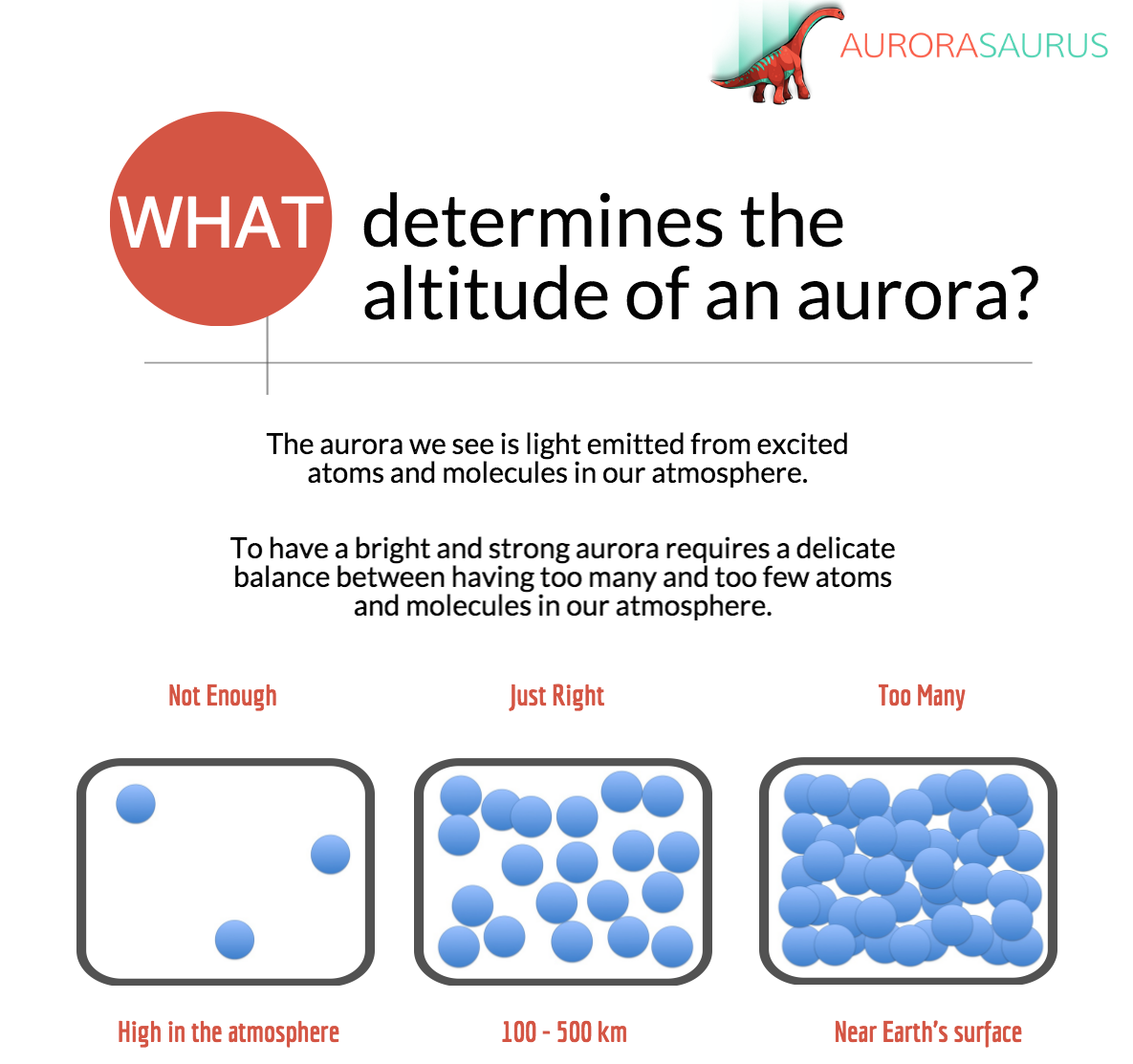
Ever wonder how high an aurora occurs? Yeah, it is up there… like the clouds… or airplanes. But do you have any idea how high? Take a look at this infographic, third in a five part series, and find out what determines the altitude of an aurora. (Hint: It is surprisingly high!)

This infographic addresses how atoms and molecules in the atmosphere get excited and what that means.
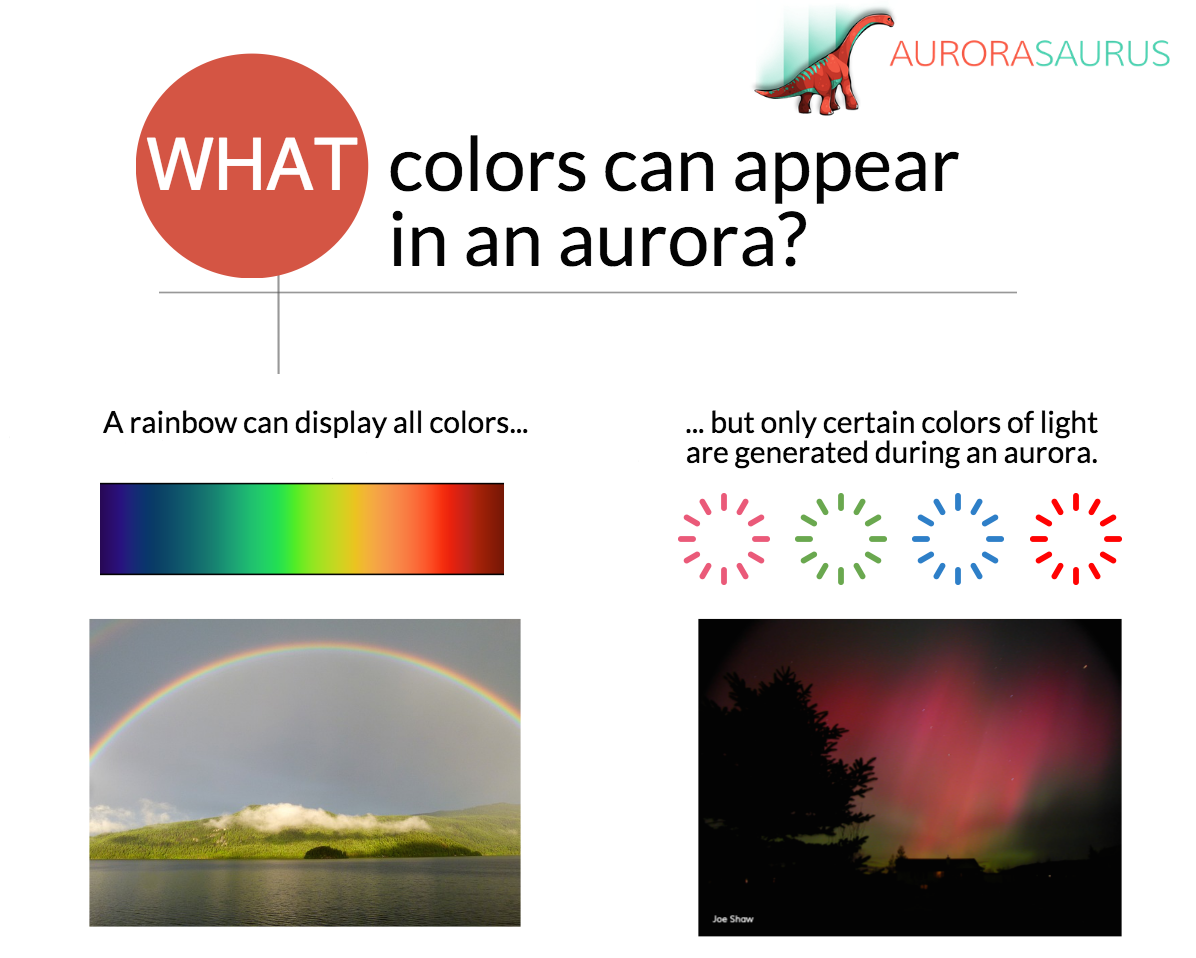
The infographic discusses what colors you might see in an aurora, why this is the case and shows off some beautiful photos of the aurora taken by aurora-hunters such as yourself!

By Gareth Dorrian Auroras paint Earth’s sky with streaks of greens, reds, and blues— but Earth isn’t the only planet to experience this surreal luminous spectacle. Scientists have observed auroras around other planets in our solar system. Although we do not have any extra-terrestrial based Aurorasaurus users to send us their photographs, we are still… Read More »Are There Auroras On Other Planets?