This is an update to a 2015 infographic series by Aurorasaurus team member Jessica Clayton.
A rainbow can display all colors, but auroras tend to occur with very specific colors: usually red, green, blue, and pink. Why? These colors are determined by:
- The kinds of atoms and molecules in the Earth’s upper atmosphere
- How much energy these atoms and molecules receive
- How high in altitude the atoms and molecules are
- Color mixing and perception in human eyes and camera sensors

In this post, we revisit the auroral colors image featured on our “Learn” page and delve in a little deeper.
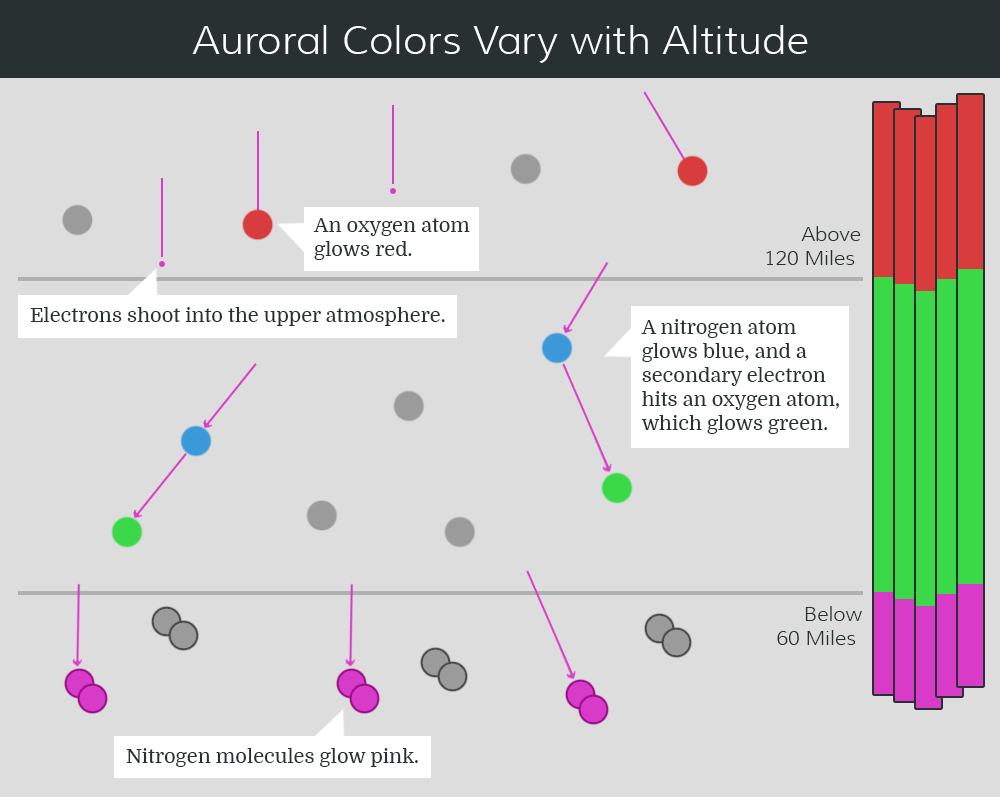
A quick science refresher
For our purposes, atoms and molecules are surrounded by whirling electrons spaced at specific distances called shells around a nucleus or center. When an electron receives energy, it can become “excited” and pop to a shell that is further away from the nucleus. How far the electron can move depends on how much energy it receives.
But while travel can be fun, home is where the heart is, and the electron wants to get back to its original shell. After a specific amount of time, it releases the extra energy as a particle of light, or photon, with a specific wavelength. The electron then moves back to its original shell, or ground state. The image below depicts the way that this creates the most common auroral light, green, which is released after an electron from space collides with an oxygen atom and transfers some of its energy.

Because of these different energy levels, atoms and molecules are capable of giving off more than one color of light. For example, green and red light can both be made by oxygen. This is because they are energized in slightly different ways, absorb slightly different energy, and their electrons come back to ground state from different shells.

In addition, as shown above, different types of atoms and molecules release different colors because their atomic shells are spaced differently.

Oxygen (left) can make red and green, and nitrogen (right) can make blue and red photons, which mix to produce shades of blue, purple, magenta, and pink. What we see from the ground is a summation of millions of these interactions generating individual photons, like a forest of fireflies or a shimmering cloud of glitter. That said, not every collision creates light; many produce no visible photon. Some energy becomes heat instead, and sometimes “secondary” electrons get kicked out of the atom or molecule altogether and can go on to create additional collisions, excitation, and light.
An atmospheric parfait
The air we breathe is very dense and well mixed. But the partially charged upper atmosphere has layers, like cakes, parfaits, and ogres. Different kinds of atoms and molecules tend to live at different altitudes, in different concentrations. An aurora demonstrates a delicate balance between too many and too few atoms and molecules in the atmosphere. Generally speaking, atoms and molecules are very spread out on the edge of space and gradually become more concentrated as you get closer to the Earth’s surface.
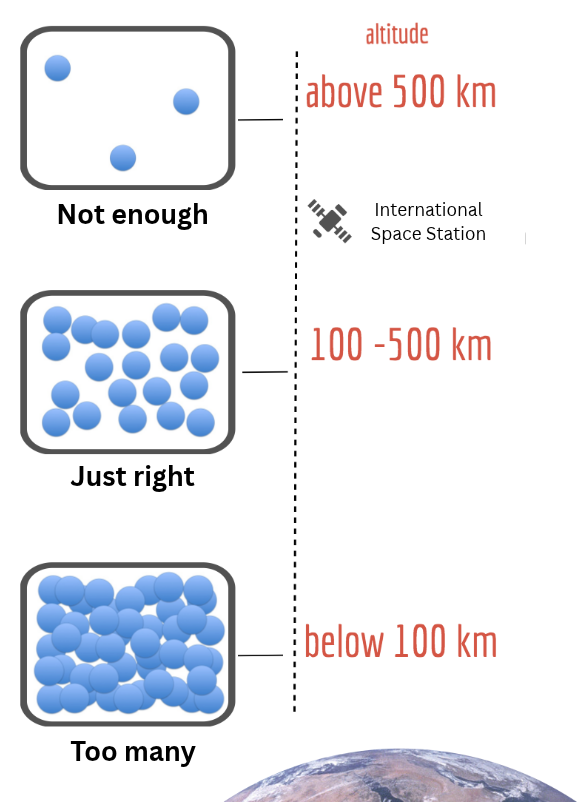
Above 500 km (about 300 mi) in altitude, energetic particles rarely hit atoms and molecules because atoms and molecules are so spread out. With so few collisions, there usually isn’t a noticeable auroral glow.
Between 100 and 500 km (about 60 to 300 mi) above the Earth’s surface, there is a perfect concentration of atoms and molecules that can become excited. Therefore, auroras regularly occur.
Below 100 km (about 60 mi) altitude, there are too many atoms and molecules, so energy is quickly lost to collisions, and atoms and molecules can’t get excited enough to give off auroral light. The glow is lost and the aurora has a sharp lower border. This is why aurora occurs mostly in a specific altitude range, between 100 and 500 km (about 60 to 300 mi).
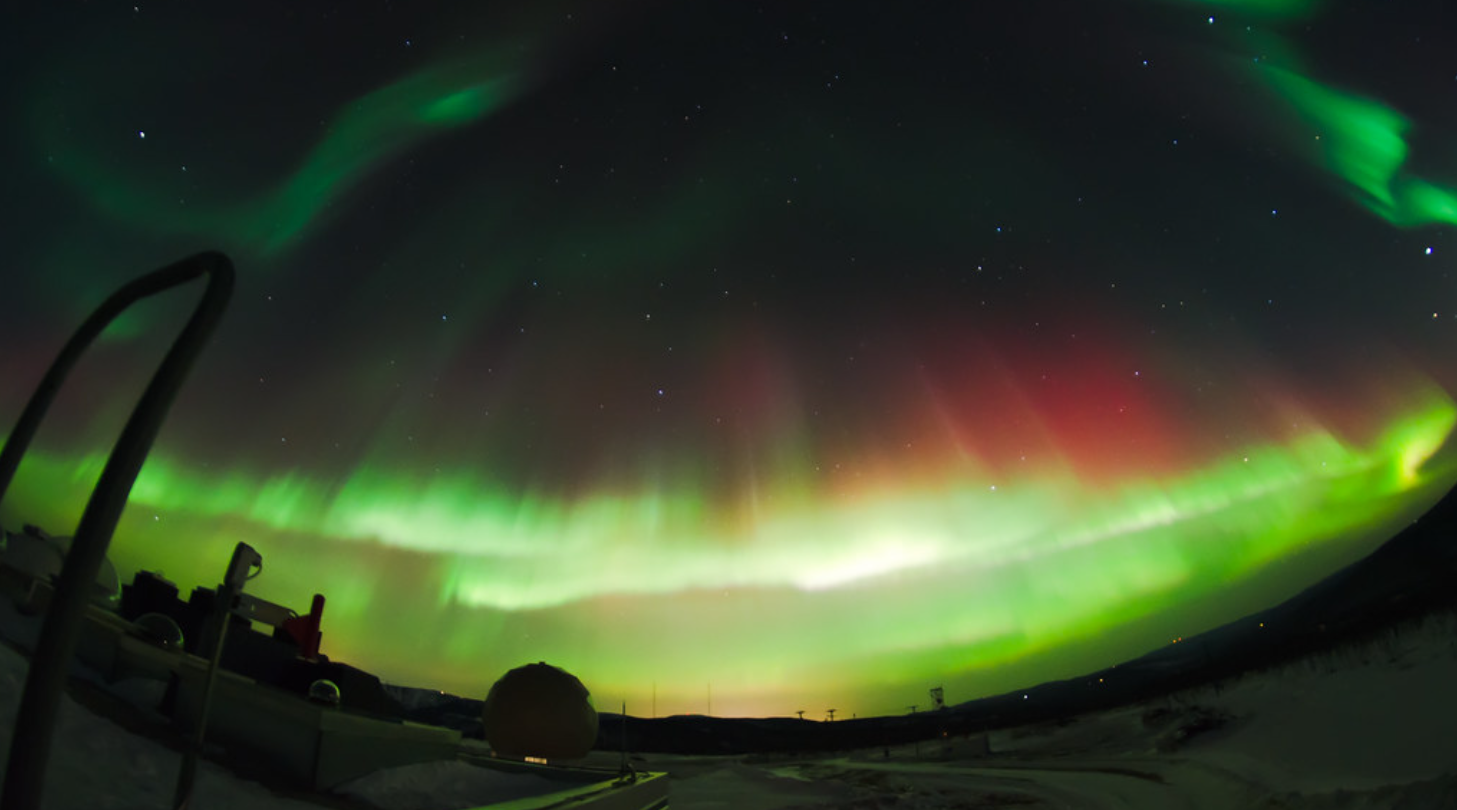
Color is also influenced by how crowded each area of the atmosphere is. For example, oxygen is the most common element at the altitude where auroras occur. Oxygen atoms and molecules can release photons in either green or red colors, depending on the level to which the atom or molecule is excited. If an oxygen particle is excited to the level that creates green light and doesn’t use up that energy by bumping into something else, then it will release a photon after 1 second. If an oxygen particle is excited to the (lower) energy level that makes red and has no collisions, it will release light after 110 seconds.


That’s a long time for an excited oxygen atom or molecule to avoid collisions, so red tends to occur in the upper regions of the atmosphere, where atoms and molecules are much more spread out, rarely colliding with each other. To tie it all together: because oxygen is very common at auroral altitudes and it only takes 1 quick second to emit a green photon, green is the most common color of aurora and becomes brighter as altitude decreases.
A rainbow of hues
We’ve talked about red and green, but what about other colors? Blue and pink may occur due to similar processes as red and green, but with nitrogen atoms and molecules instead of oxygen. A blended pink hue tends to show up near the lower boundary of aurora during strong storms because there are higher levels of nitrogen below 100 km (60 mi and sometimes the incoming particles have extra energy to keep going and create light lower down. Yellow, cyan, or purple can appear due to the way our eyes perceive colors of light mixing.
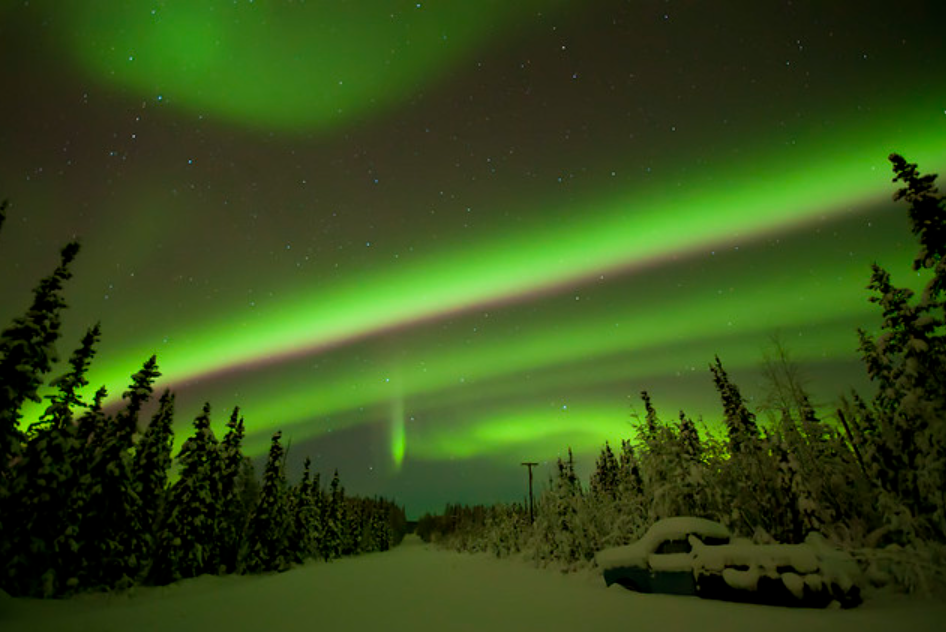
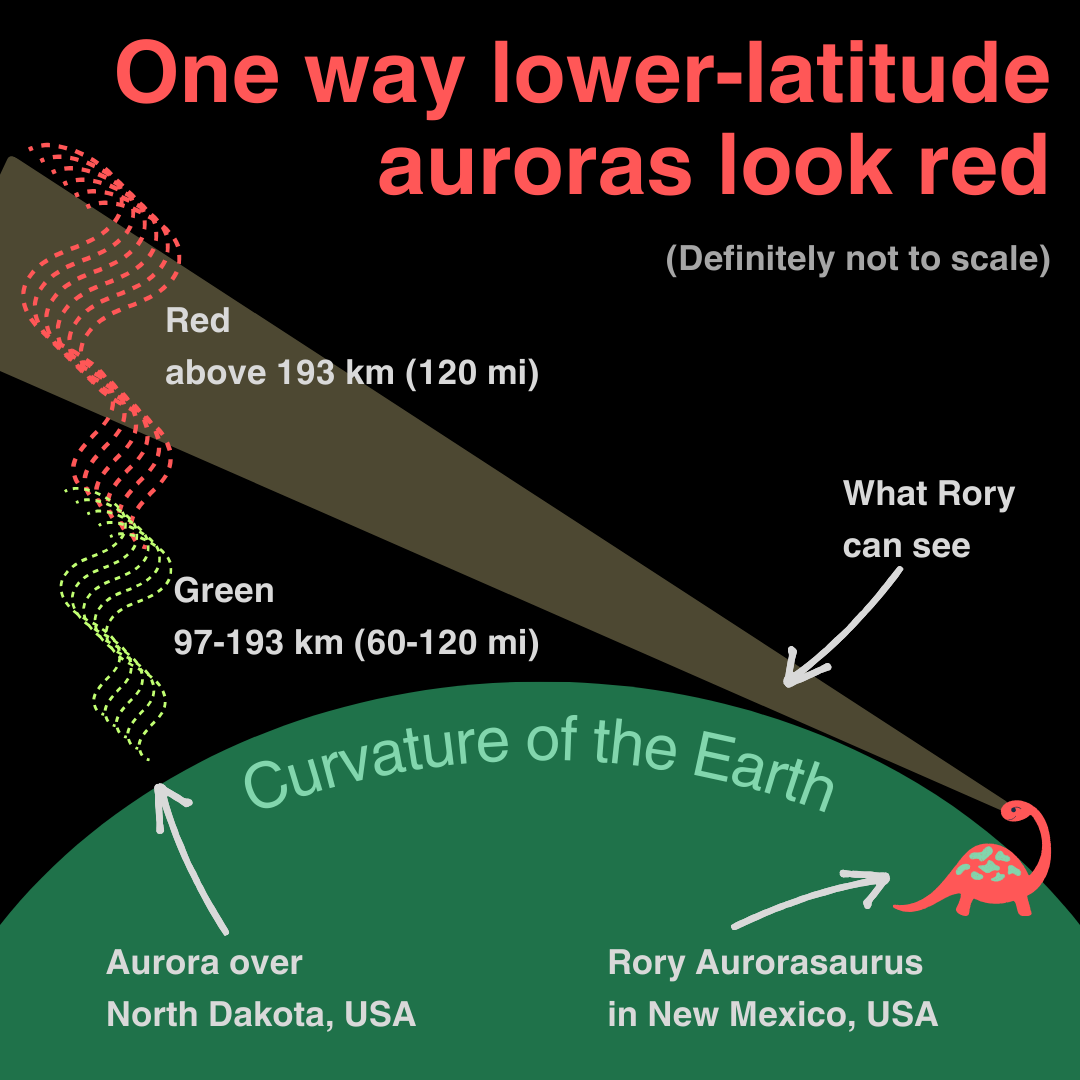
The colors that are visible can also have to do with your location. If you are looking at the side of an aurora from very far away, the curvature of the Earth can block part of your view and make the aurora appear mostly red.
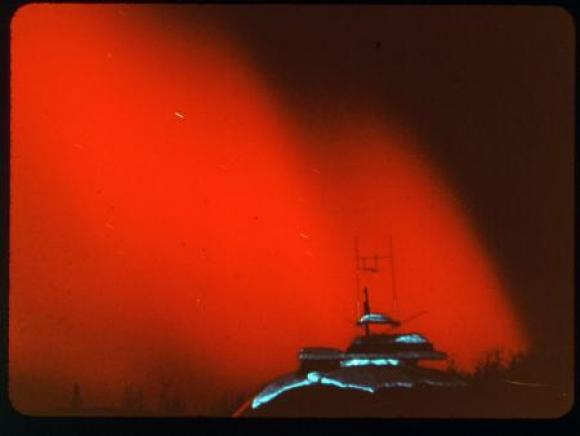
Some red colors can also occur in special circumstances, such as large storms.
Elementary, my dear aurora
In this post, we’ve talked about why different auroral colors occur at different altitudes. With this information, each aurora photograph becomes a logic puzzle. If color corresponds to element and altitude, we can look at an auroral photo and determine what it’s made out of and how high up it is. Of course, the exceptions, such as those at lower latitudes during large geomagnetic storms, are very interesting as well.
This is an important part of why we ask about colors in the Aurorasaurus reporting form, and why images are so helpful to include. With just a few notes on what you see, you can provide a wealth of information for science!

Resources
Original infographic series
What colors can appear in an aurora?
How are atoms and molecules excited to make aurora?
What determines the altitude of an aurora?
Why is green the most common color for an aurora?
How does location affect the colors you see in an aurora?
An American Chemical Society YouTube video with more information about aurora color
One of the best places to learn more is a free, undergraduate-level educational module from Comet MetEd (UCAR) called Space Weather Basics: 3rd Edition and Physics of the Aurora: Earth Systems (you’ll need to create an account on their site to access them).


