Please excuse the slight delay in posting this while we underwent tech updates on our blog.
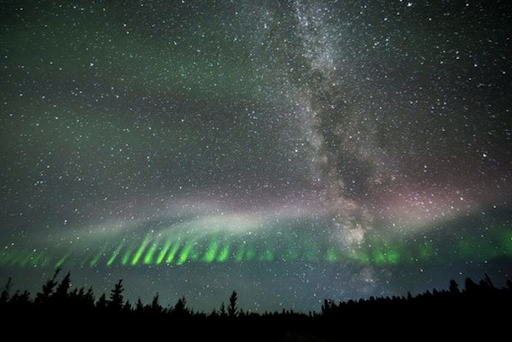
While our favorite quirky purple arc has been observed for millennia, we want to celebrate one highlight in its relationship with humanity. STEVE (“Strong Thermal Emission Velocity Enhancement”) is a purplish arc with stripy green ray features that runs east to west and appears closer to the equator than regular aurora. Five years ago on Pi Day (3.14), citizen scientists in the Alberta Aurora Chasers group and scientists worked together to publish the first modern paper on it: “New science in plain sight: Citizen scientists lead to the discovery of optical structure in the upper atmosphere”. The study, lead authored by our own Dr. Elizabeth MacDonald, launched STEVE’s popularity. In this post, we’ll update you on what STEVE has been up to, as well as sharing memories. What’s your favorite STEVE adventure?
“The Aurora Named STEVE,” video by NASA Goddard
Memory Lane
But perhaps STEVE’s greatest achievement over the last five years has been the friends it met along the way. The Aurorasaurus Ambassadors and Early Career Group reflect on their favorite memories:
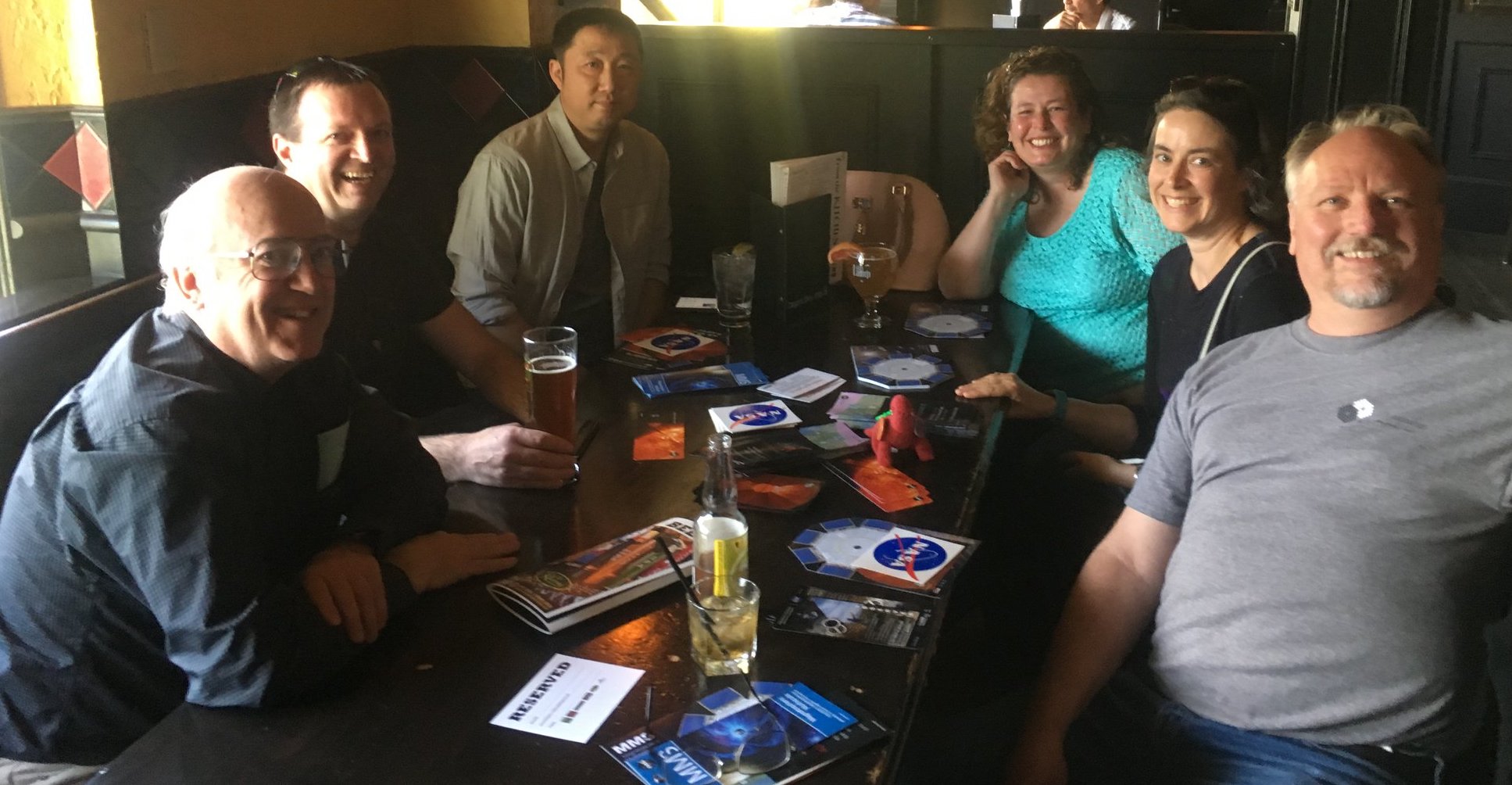
Dr. Liz MacDonald
STEVE has, in short, been a phenomenon! (or a phenomenal phenomenon). I am so grateful to have had the opportunity to be on this journey, and to learn together. In the process we help uncover the processes of science, disrupt it, and figure out how to be more innovative and most importantly, open.

Neil Zeller
To be at the Kilkenny Pub that fateful day, and being a part of the start of STEVE, will forever be a highlight for me. The opportunities to help advance the science of STEVE has been a wonderful part of my life and career.
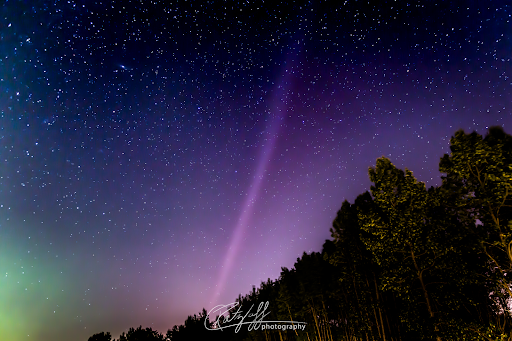
Chris Ratzlaff
STEVE has connected me to a world I never thought possible.
From STEVE, I’ve learned that there are important questions that I can contribute to answering and that there are scientists seeking the speed and accuracy of citizen collaborations.
Through STEVE, I’ve learned that many Aurora seekers are eager to help contribute citizen science observations and have helped grow and nurture our Aurora community astronomically over the last few years as they’re introduced to the knowledge that this science can help them see Aurora from their (middle-latitude) backyards!
With STEVE, I’ve uncovered so many friendships around the planet and have been exposed to opportunities that would not have otherwise been possible.
Sheryl R Garrison
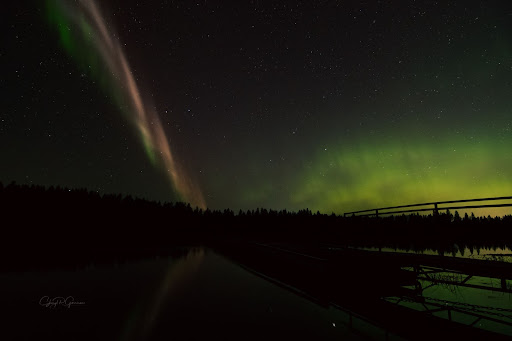
My first encounter with this phenomenon took place on the evening of May 7, 2016 in Sandpoint, Idaho, USA. Unable to sleep, I checked an aurora app that showed enough activity to warrant getting out of bed for—and was I ever glad I did. Arching across the sky from east to west was an unusual swath of pink. I quickly drove to a favorite spot and began documenting what I later would find out was STEVE. It was an unforgettable night.
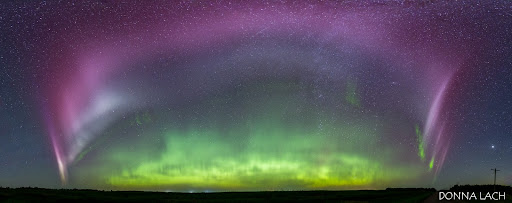
Donna Lach
“This STEVE was the most massive one I have seen, of the 22 I have recorded. It was directly above me and it’s beauty blew me away. How incredible it was to witness and compare sightings across the prairies that night. “
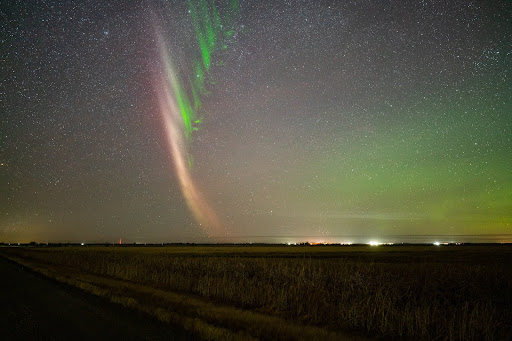
Vincent Ledvina
STEVE is one of the things that inspires my aurora chasing. I learned about it in 2018 starting at the University of North Dakota (UND), where I could see aurora on rare occasions. But since I was in the subauroral zone I had good chances of seeing STEVE, and captured my first image in fall 2019. Later that year, I met Dr. Liz, the Aurorasaurus Ambassadors, and scientists at a conference. They took interest in my photo, and I learned that photographers were driving STEVE-related scientific discoveries. STEVE shows us that there are still things to be understood about the aurora and our natural world. Citizen scientists in the field can shed light on these new phenomena and become collaborators in scientific projects.
A Celestial Highlight Reel
- STEVE starred in a documentary alongside a number of its devoted Alberta Aurora Chasers. The energy and passion of their connection with the night sky is contagious!

Top Photo: Størmer C. (1935). Remarkable Aurora-Forms from Southern Norway. I, Feeble Homogeneous Arcs of Great Altitude, Geofysiske Publiskasjoner, 11(5) - STEVE can’t thank the Academy, but it’s an award-winning phenomenon nonetheless! From NASA alone, Aurorasaurus and STEVE teams received NASA GSFC’s 2018 Robert H. Goddard Group Honor Award for Exceptional Achievement in Science, as well as a NASA Honor Award – Group Achievement Award!
- Aurorasaurus Ambassador Dr. Michael Hunnekuhl delved into historical archives and found documents and photos by early aurora scientist Carl Størmer about “feeble homogenous arcs of great altitude”. We like the name STEVE better, but it’s incredible to have this kind of backstory!
- The Royal Canadian Mint issued a commemorative silver coin, which glows under UV light!
- Citizen scientists and scientists continue to collaborate on studying the science of STEVE. These are a few highlights in which aurora chasers and citizen scientists were actively involved:
- Dr. Michael Hunnekuhl has taken on the herculean task of creating a massive database of STEVE sightings for science! His work has shown just how plentiful STEVE observations by aurora chasers are. Find out more here.
- Some studies yielded new results that are still being actively researched! Using the above database of observations, Dr. Michael Hunnekuhl and Dr. Joshua Semeter analyzed tiny, Mysterious Green Streaks Below STEVE. Their findings push toward finer, quicker camera exposures that can capture such details. They presented about their work to the Aurorasaurus Ambassadors, and the recording is available here.
- Dr. Carlos Martinis et al. recently published a paper called “Rainbow of the Night: First Direct Observation of a SAR Arc Evolving Into STEVE,” coauthored by citizen scientist Ian Griffin. Dr. Martinis delved into the study in a presentation to the Aurorasaurus Ambassadors, watchable online.
- Dr. Bea Gallardo-Lacourt et al. authored a review paper that looks into the research done on STEVE and other similar phenomena. It’s a great resource if you’re looking to get a feel for what science has been done, and what questions are still open.
- Dr. Toshi Nishimura et al. recently published “Unsolved problems in Strong Thermal Emission Velocity Enhancement (STEVE) and the picket fence.” Coauthors Alan Dyer and Lauri Kangas are citizen scientists. We look forward to more collaborations between citizen scientists and scientists to answer some of these questions.
- And so much more thanks to ALL of you who have contributed along the way! We are very appreciative!
STEVE holds a special place in the hearts of scientists and aurora enthusiasts around the world. It even has its own Twitter account @STEVEPhenomena. Have you met STEVE? You can add to scientific data by backdating a report to the Aurorasaurus website!


