Note: This blog post contains and links to eclipse imagery.
The April 8, 2024 eclipse was an amazing experience for millions, and inspired more than 36,000 people to #DoNASAScience! While the solar eclipse is now over, eclipse participatory science projects are going strong. In addition, the Heliophysics Big Year—a global celebration of solar science and the Sun’s influence on Earth and the entire solar system—is on through December 2024! There are still many ways to be involved, including learning about the Sun and taking part in participatory science. This month, which is Citizen Science Month, you can also be part of SciStarter’s One Million Acts of Science! In this post, we list some of our fellow participatory science projects, active all year round.
Try out a project on Zooniverse
Zooniverse is an online platform that hosts a huge variety of participatory science projects. It’s quick and easy to try something new!
 |
Solar Jet Hunter: Did you see small-scale features in the corona during the eclipse? Join the hunt for solar jets, which are small and narrow ejections of solar material, to help us address some of the Sun’s mysteries. The goal of this Zooniverse project is to build a database of solar jets. Building this database will provide a jumping-off point for researchers to study the physics of solar ejections. The database will allow researchers to find interesting cases, compare data across other types of solar activity databases, and conduct broad statistical studies of jet properties. |
 |
Planet Hunters TESS: The Transiting Exoplanet Survey Satellite (TESS) is providing a huge amount of data that lets us look for planets outside of our own Solar System and you can help! Every two years TESS will be busy surveying two-hundred-thousand bright nearby stars, measuring and recording their brightness every two minutes. Help uncover interesting planetary systems, allowing exploration of the formation and evolution of these worlds. These findings may even bring us one step closer to answering the question that we all seek to answer: Are we alone in the Universe? |
Dig deeper into science
If you want to get more hands-on with heliophysics, these projects offer more involved ways to delve into participatory science.
 |
The Sungrazer Project is a NASA-funded program that enables the discovery and reporting of previously unknown comets in the ESA/NASA SOHO and NASA STEREO satellite instrument fields of view. Anyone, anywhere in the world can become a “Comet Hunter”, and begin looking for new comets in the spacecraft data. The Sungrazer Project provides enables the reporting of these comets, and subsequently allows the project team to ultimately turn the comet reports into officially designated comets. They recently found their 5,000th comet! |
 |
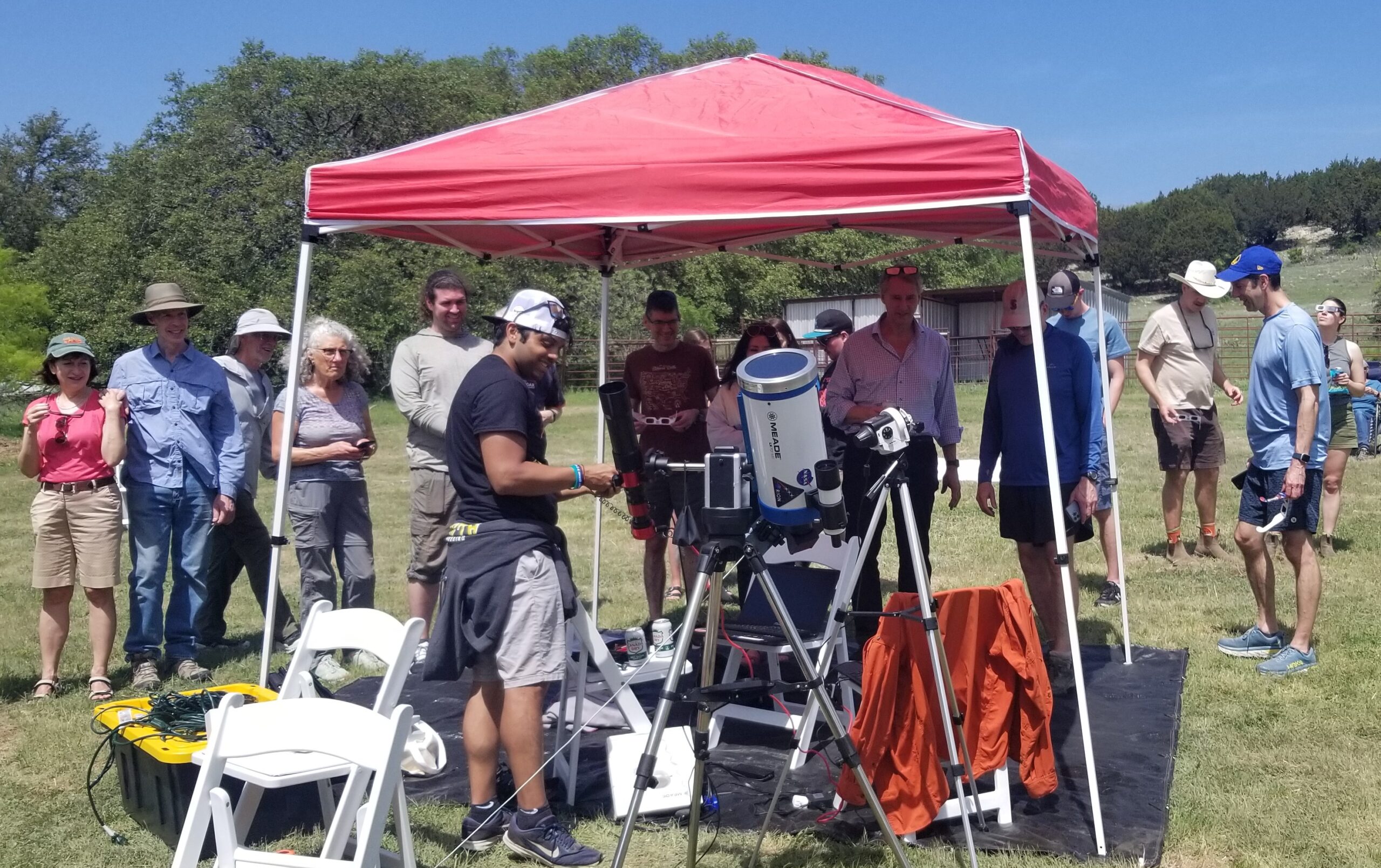
Exoplanet Watch is a NASA citizen science project, sponsored by NASA’s Universe of Learning, that lets anyone and everyone (yes, you!) learn about planets that orbit stars beyond our solar system and get involved in observing them. This would be a great project for those who participated in Citizen CATE or the Dynamic Eclipse Broadcast Initiative to check out with their telescope equipment. |
 |
The Eclipse Soundscapes Project funded by NASA Science Activation is studying how eclipses affect life on Earth during the October 14, 2023 annular solar eclipse and the April 8, 2024 total solar eclipse. An important way for people to participate in this project now is by helping to analyze all of the soundscape data that is collected. Anyone with an internet connection can learn how to analyze data as an “Eclipse Soundscapes Data Analyst” through free online training. After you analyze soundscape data you will earn an Eclipse Soundscapes Data Analyst certificate of completion. |
 |
HamSCI, the Ham Radio Science Citizen Investigation aims to::
HamSCI serves as a means for fostering collaborations between professional researchers and amateur radio operators. While HamSCI ran a number of events during their 2023 and 2024 HamSCI Festivals of Eclipse Ionospheric Science, amateur radio operators can participate anytime. |
Charge your camera batteries
Calling all photographers! If you love photos of the night sky, check out these projects!
 |
Spritacular is a citizen science project that collects observations of sprites and other optical phenomena occurring above the thunderstorms, collectively known as Transient Luminous Events (TLEs). The database generated from these observations lays the groundwork for first-ever event catalog of TLEs that will greatly contribute to the advancement of scientific studies. |
 |
Aurorasaurus: And of course, you can take part in aurora participatory science with us! Each report made to our website serves as a valuable data point for scientists to analyze and incorporate into space weather models. In collaboration with participatory scientists and the scientific community, we have made a number of discoveries, and look forward to continuing to work with you to learn more about the Northern and Southern Lights during the upcoming solar maximum. |
Bring science to life in the classroom
Teachers can add hands-on, real science to the classroom through these student-oriented participatory science projects.
 |
GLOBE, the Global Learning and Observations to benefit the Environment Program, is a worldwide program that brings together students, teachers, scientists and citizens to promote science and learning about the environment. During the eclipse, they gathered observations from perspectives on the ground as part of the GLOBE Eclipse Challenge: Clouds and Our Solar-Powered Earth. However, they have a myriad of other ways to participate, including ways to make the most out of aurora chasers’ nemesis: clouds! |
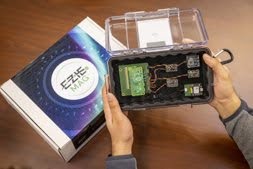 |
EZIE-Mag is a citizen science magnetometer program, which will enable students to capture science data similar to that obtained by the EZIE mission, from a terrestrial perspective and simplified instrumentation. Supporting the existing network of ground-based magnetometers, this program will distribute kits that enable diverse communities to contribute critical mission science for the EZIE mission. Learners who use the kit have the exciting opportunity to collect and upload mission science data as citizen scientists. The project is now open for high schools. |
 |
With Radio JOVE and The SunRISE Ground Radio Lab, students and amateur scientists from around the world observe and analyze natural radio emissions of Jupiter, the Sun, and our galaxy using their own easy-to-construct radio telescopes. The projects made observations during the total solar eclipse and continue to be open to participants. Educators can sign up on the projects’ respective websites, and small grants are available for students and teachers to bring projects like Radio JOVE to the classroom. Anyone can participate in Radio JOVE by registering on their website. |
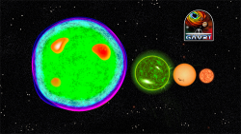 |
GAVRT Solar Patrol seeks to engage students in daily observations of the Sun in order to deepen their understanding of the Sun’s significance in their lives. GAVRT will produce daily solar maps, and involve citizen scientists in the process of collecting and analyzing the data. These data will be used to improve our understanding of how the Sun generates space weather and its impact on the Earth. |
Make 2024 a Stellar Year
The Heliophysics Big Year will continue until its grand finale when Parker Solar Probe flies into the atmosphere of the Sun, and will become the closest human-made object to ever “touch the Sun.” We hope you’ll join us in celebrating the Big Year by taking part in many solar science events such as watching solar eclipses, experiencing an aurora, watching interesting talks like this one from Dr. Pamela Gay, participating in citizen science projects, and other fun Sun-related activities! You can also take part in monthly themes: next up is Visual Art! Be part of the conversation @NASASunScience on Facebook, @NASASun on X/Twitter, and @NASASolarSystem on Instagram.