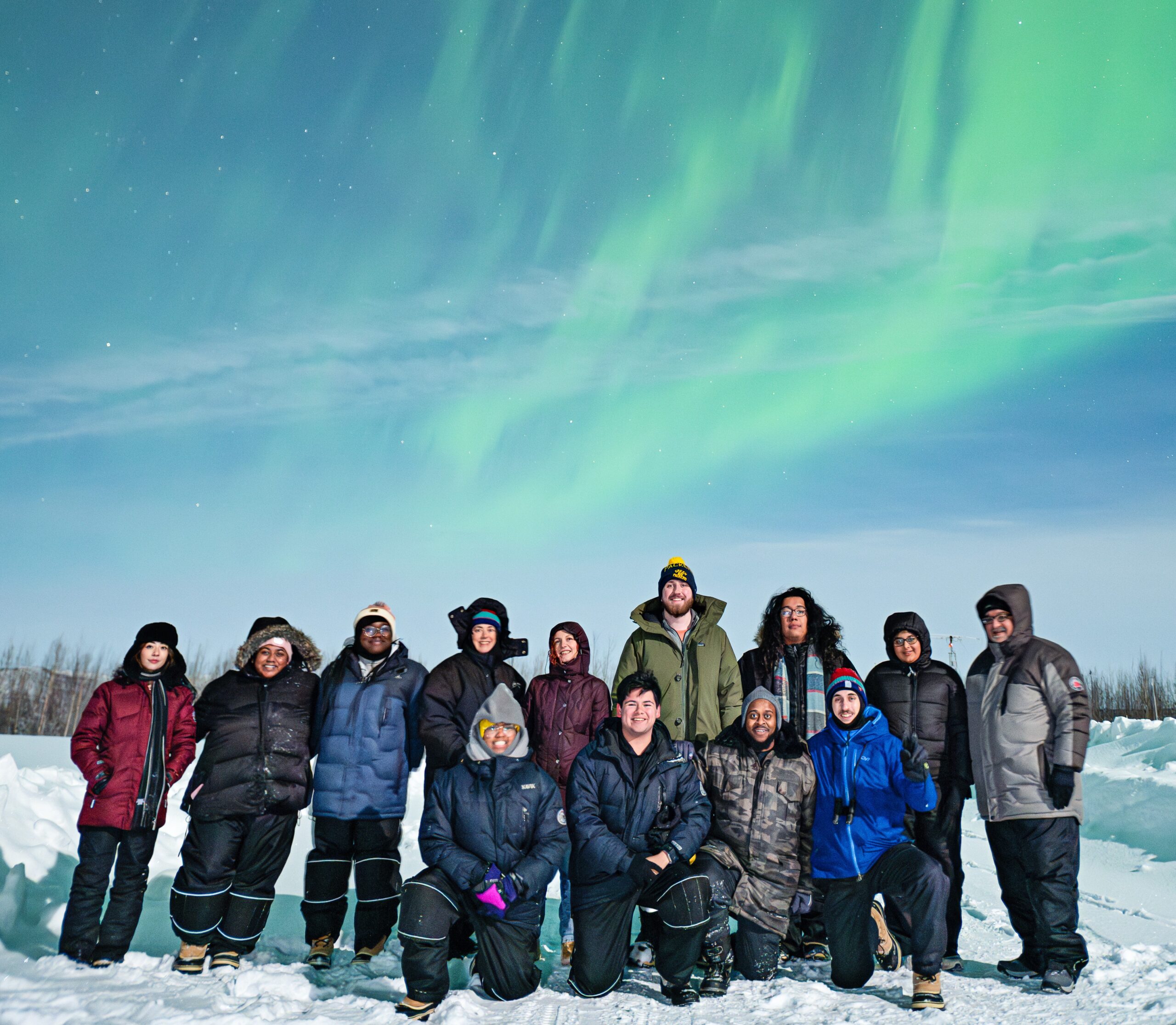
For many across the world, seeing the aurora is a life goal, something for the bucket list. Realizing the dream of a successful aurora chase can be an awe-inspiring, profound experience. If you’ve seen the aurora, do you remember how you felt the first time you saw it dance?
You’re not alone. In early January, nine undergraduate and graduate students traveled to a week-long Eclipses to Aurora: Winter Field School at the University of Alaska Fairbanks to round out the Heliophysics Big Year. Participants had been part of the Eclipse Ambassadors program. They were selected for a culminating field experience in the Winter Field School: an educational introduction to another aspect of the field of heliophysics. Along with expert lectures and hands-on learning opportunities with Poker Flat Rocket Range, the Museum of the North, students learned about heliophysics, actively participated in citizen science data collection using a variety of instruments—and experienced their first aurora chase.
As one of their assignments, participants crafted “epiphany essays” describing their learning. We are starting this blog post series by highlighting their deep thoughts and reflections on seeing the aurora for the first time during this transformative experience.
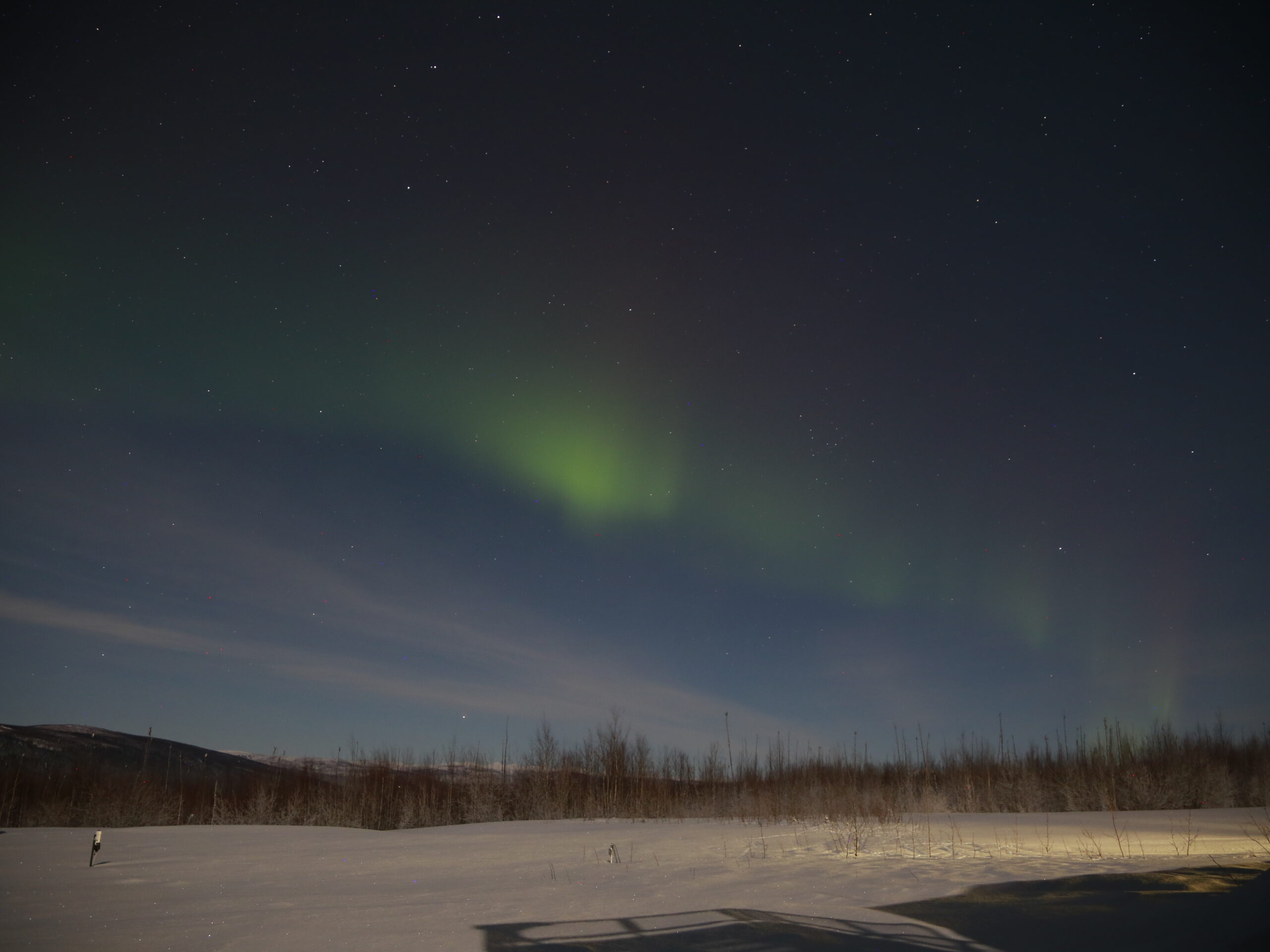
On our first night at Cleary Summit, I saw Polaris, the North Star, at an inclination of 64.9 degrees above the horizon. I knew this because I had studied it in college: the inclination of Polaris corresponds to your latitude on Earth. That night, we saw a faint aurora—a small, lone arc. It wasn’t the most impressive display, a heliophysicist would say, but for many of us, including myself, it was one of the most beautiful sights we had ever seen. I looked at the aurora with a naive smile on my face, the same smile I wear whenever I walk or drive to stargaze. It’s the kind of smile that reflects pure, unfiltered awe—the same awe I’ve always felt whenever I’ve looked up at the night sky.
—Feras

When we went outside to chase the auroras, the cold hit me first. The freezing air was sharp, and I could barely feel my fingers even with gloves on. But none of that mattered because we all had one goal: to look at the sky and find the northern lights. Standing there under the vast Alaskan sky, surrounded by people from different backgrounds and different levels of understanding about heliophysics, I started to feel something shift.
It didn’t matter if I didn’t know all the scientific terms or if I wasn’t an expert in space science. In that moment, we were all just people looking up, waiting for something magical. And when the auroras finally appeared, it was like the sky itself reminded us that we were connected. We all stared in awe, sharing smiles and excitement. The auroras didn’t care about our majors or our knowledge—they brought us together under the same sky.
—Khalid

After spending time outside collecting data in the biting cold, where the aurora was only just beginning to stir, I returned to the visual viewing room for warmth. The air outside had been sharp and unforgiving, but inside the glass box, everything felt different. I plopped down on the couch, letting my body sink deep into its embrace. My head tipped back, and even from inside, I could still see the aurora stretching and swaying across the sky, its colors weaving quietly through the night. As I settled in, a sprinkle of shooting stars flashed across the vast expanse above, each one fleeting and impossibly beautiful. The cold that had stiffened my fingers and chilled me to the bone was now a distant memory; warmth filled me, both inside and out. For the first time in what felt like forever, I wasn’t worried about anything at all. The fragility I often feel—like I’m made of glass, ready to shatter under the slightest pressure—melted away in that moment. All I could do was bask in the wonder and glory of it all, wrapped in warmth and awe, as if the universe itself had paused to breathe with me.
—Sophia
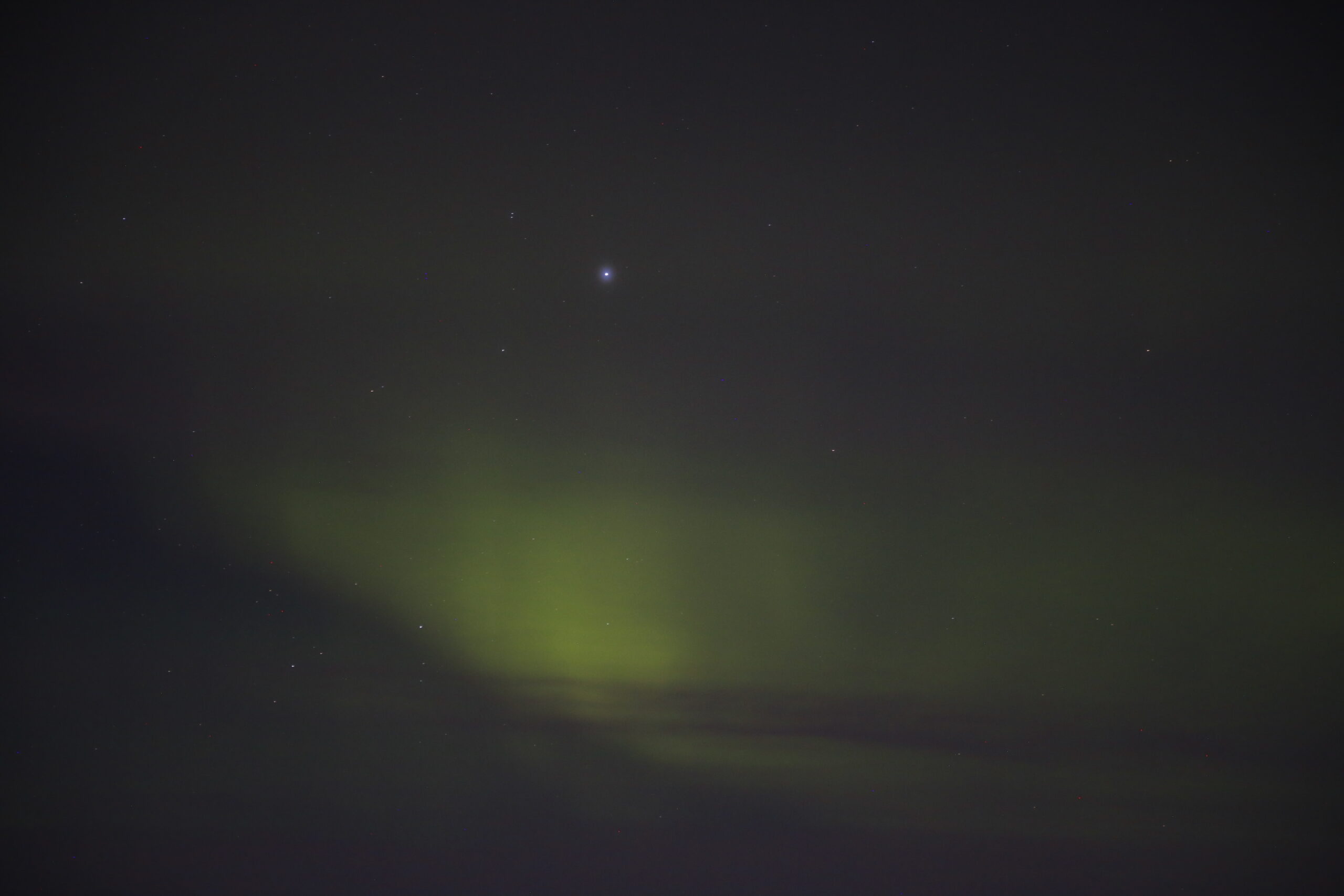
How beautiful it is to reflect on the simplicity of that moment. We were not engaged in solving complex problems or pondering the intricacies of rocket propulsion systems. We were simply observing something timeless—an awe-inspiring natural phenomenon that has existed for millennia. My role as a photographer on this trip helped elevate some of those sentiments, forcing me to acknowledge the simplicity in seeing the joy on people’s faces as I depressed the shutter button on my camera to grab that very moment in time to hold onto for an eternity. This experience serves as a reminder of the fulfillment that comes from embracing the simplicity of life’s most profound moments. Those moments of gazing up at the night sky and watching a bright, green, liquid-like light tear through our atmosphere. Those moments of talking to individuals who felt as though they are doing exactly what they have always wanted to do. Those moments of looking through the viewfinder on my camera and witnessing excitement in its purest form. Those moments of being together.
—Jeffrey
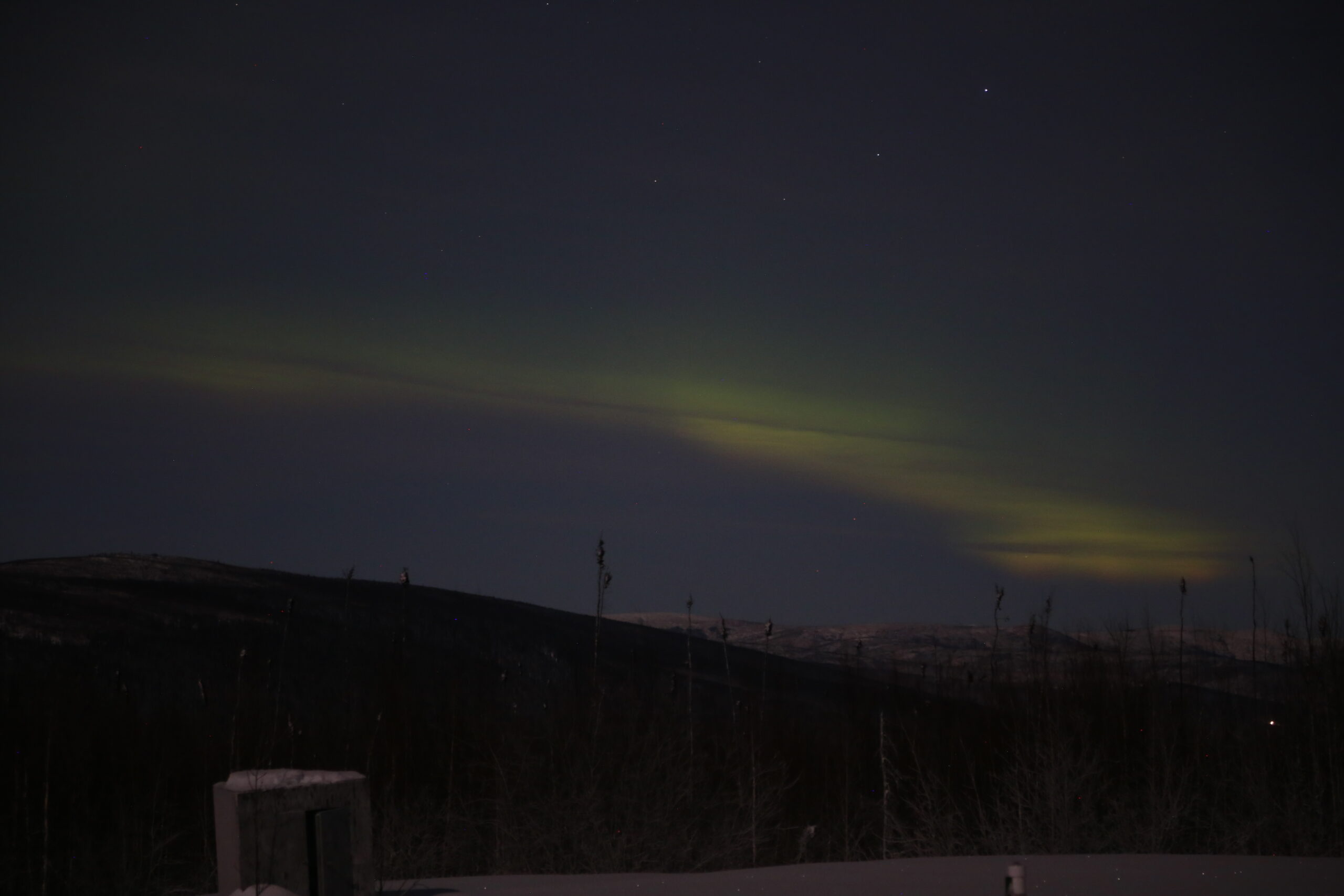
The air grew quiet, almost reverent, as though the universe itself was holding its breath in anticipation. The familiar sounds of the world around me—the crunch of snow beneath boots, the faint rustle of branches in the crisp, cold air—seemed to fall away, leaving nothing but stillness. It was as though everything had stopped, allowing space for something sacred to unfold. And then, slowly, the sky began to change. What had been a dark expanse dotted with distant stars shifted and danced with a light I could barely comprehend. At first, it was a delicate brushstroke of green, like a whisper across the night. But then it grew, twisting and twirling, moving with the rhythm of a silent song.
I held my breath as I watched the sky unravel before me. A green ribbon of aurora stretched across the heavens, flickering with the intensity of a fire barely contained. But then something more profound happened. The colors deepened and shifted, painting the sky with a palette I had never imagined. It was as if the universe had decided to reveal a secret. It beckoned, like a siren song, inviting me to stand in awe and witness its grace.
“Look!” I gasped, breaking the stillness. “It’s the aurora! The northern lights—wait, look, it’s a spiral!”
The spiraling ribbon of color seemed to pulse, alive in a way that no one could truly understand unless they had stood there in that exact moment, felt the electricity of it all surge through them. It wasn’t just beauty. It wasn’t just science. It was an experience that spoke to the very core of my being, urging me to step beyond the ordinary and reach for something more.
—Vishvi
We hope you enjoyed these portraits of their experiences. Stay tuned for more from Winter Field School students!
The Winter Field School was a supplement to the Eclipse Ambassadors program, and was led by Aurorasaurus and the Astronomical Society of the Pacific.


