With graduation season underway, we’re reflecting on the insights and experiences we would share with this year’s newly minted professionals. We’re finding ourselves inspired by the nine undergraduate and graduate students who attended the Eclipses to Aurora: Winter Field School at the University of Alaska Fairbanks. How did this experience cause them to reflect on their lives as future scientists, engineers, artists, and more broadly as people in the world? As one of their assignments, they crafted “epiphany essays” describing their learning. We continue this blog post series by sharing their pearls of wisdom about the process of doing science, and how this work benefits the world.

I am the only art student in a cohort of nine undergraduates, studying heliophysics and the aurora for a warm week in -nth degree Fairbanks, Alaska…. To be an artist, and to be a scientist is to take on the task of translator. Art and the sciences are the ways in which we interpret, extrapolate, and interact with the world we were born into. Data sings in hertz the same sunset, the way a paintbrush signals to the page. We are engaged in the same waltz, the act of archiving, a constant conversation between the senses. I do not just describe a similarity in subject matter, I am in a constant state of practice and experimentation….
Within art, science, and life, I exist in a constant state of practice and experimentation. I can never fail, when I am in a constant state of practice and experimentation. I am always exactly where I am supposed to be.
—Courtney
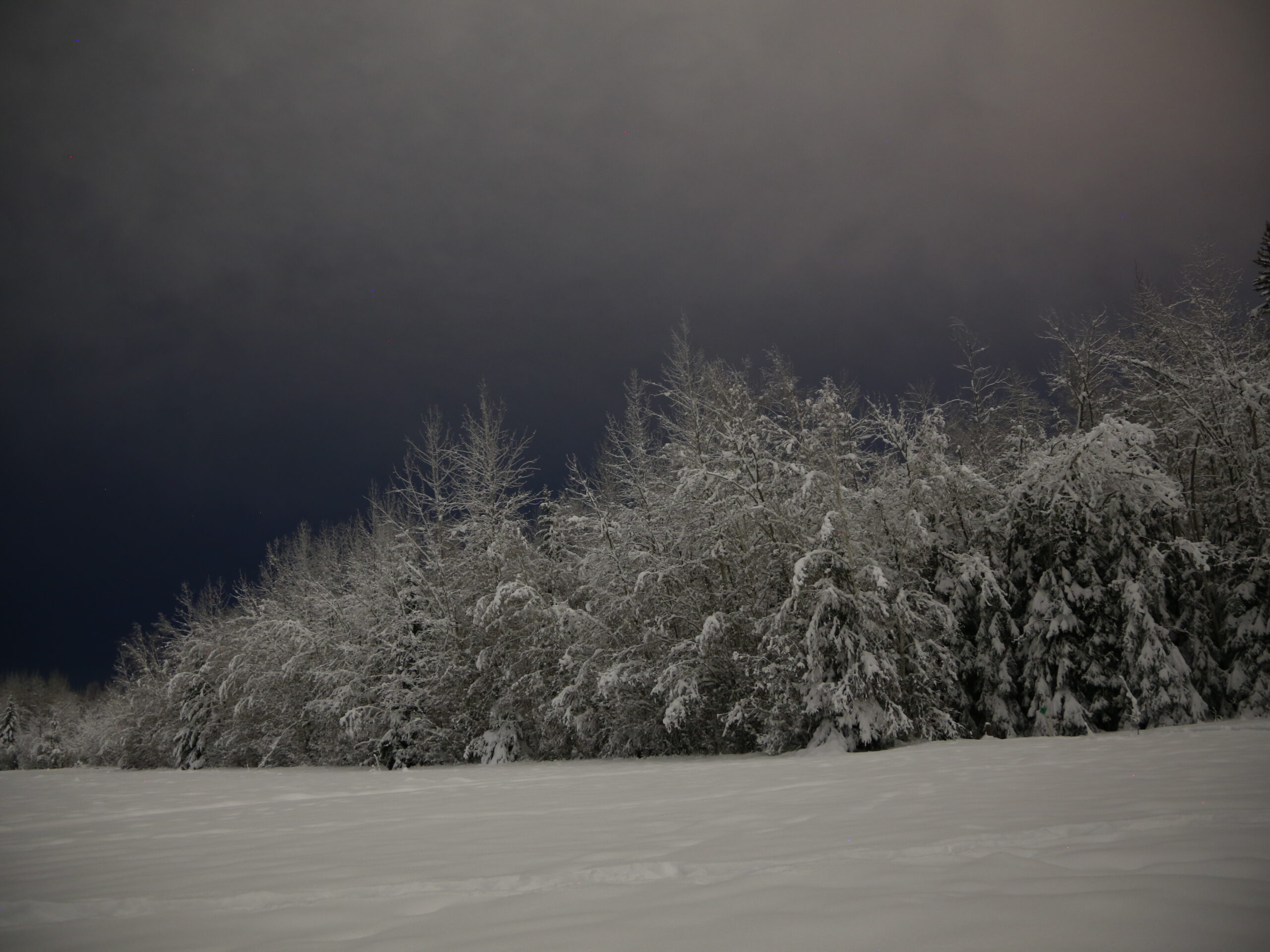
We, as scientists, employ the scientific method in our work all the time—our brains almost become hardwired to it. But what I hadn’t fully realized until recently is that the scientific method is not just a process for science; it’s a way of knowing and navigating life.
In all of my successes and failures, both academic and personal, I’ve had to identify the problem, decide on a course of action, enact a plan, see how it works, and draw conclusions—just like in science. It’s iterative, and it’s imperfect. But it’s also full of growth…. shame grows from focusing only on what is missing, while pride comes from acknowledging what is already there. Like [a] little tree, I am still growing. My work, imperfect as it might feel, is a testament to that growth.
Grit doesn’t erase the fear or doubt—it carries you through it. It is what keeps you moving forward, even when you can’t yet see the value in what you have done. And as I continue to navigate my path in astrophysics, I am learning to see myself not as someone who has to prove their worth, but as someone who is worthy simply because they persist.
—Sophia

Sometimes people ask themselves big questions, like “what are things that unify people?” I felt that I found out the answer to that question from the first night we went to Cleary Summit and Poker Flat Research Range for aurora chasing…. By the end of the week, I understood something important: you don’t have to know everything to belong. The auroras taught me that curiosity and wonder are enough to bring people together. We all came from different places, different majors, and different levels of understanding, but we were united by the beauty of the sky lights.
—Kalid
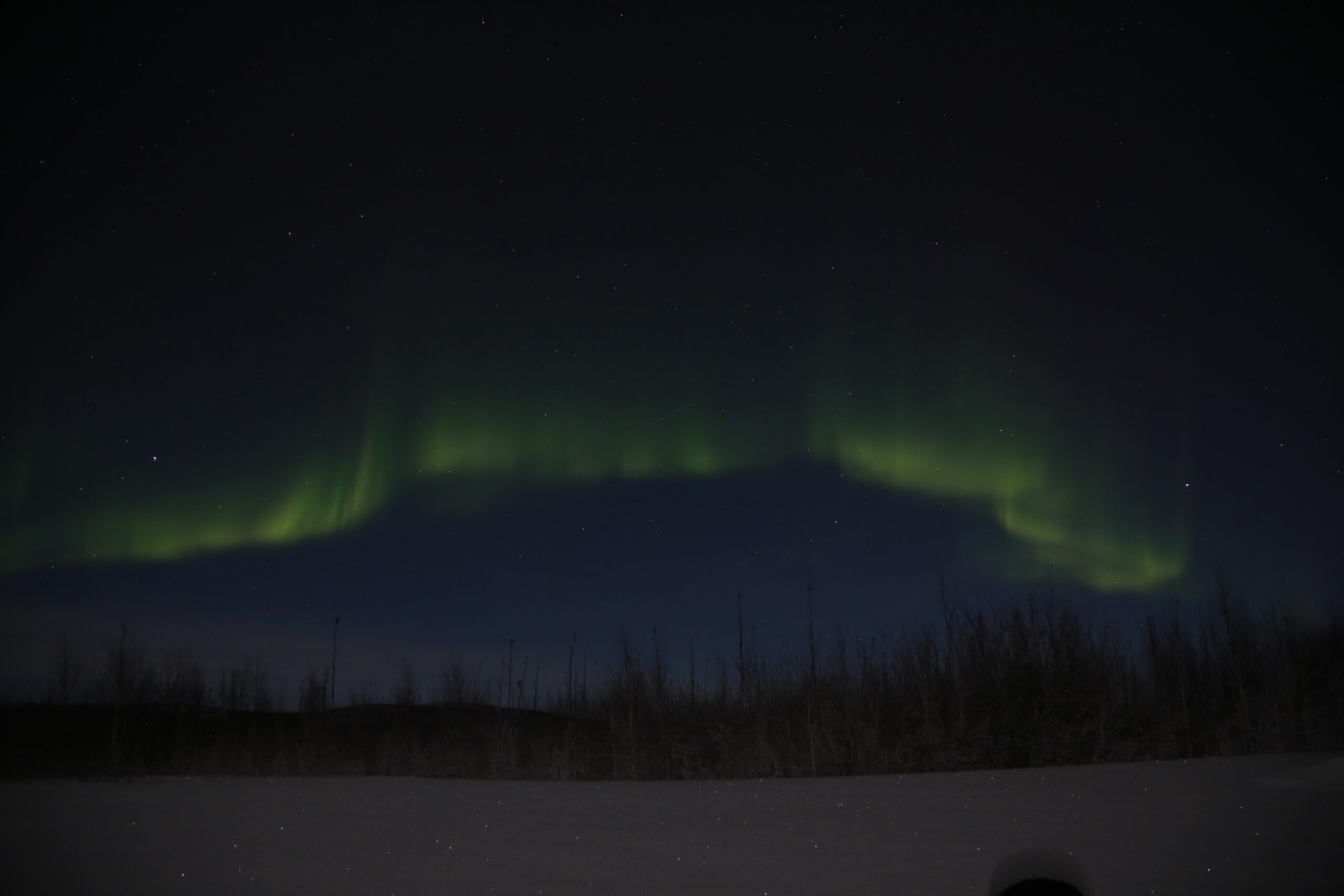
The aurora was a mirror for what it means to be human. We are born with the same curiosity that drives stars to burn, that propels comets through space, that pushes us to explore and understand the mysteries of the cosmos. The northern lights reflected that very curiosity—an ever-changing dance of wonder. In witnessing it, I realized that my passion for science was not just about knowledge—it was about connection. It was about becoming part of something much larger, much more beautiful, and much more mysterious than myself.
As the lights began to fade, the spiral slowly dissolving into the vast night sky, I felt a profound peace settle within me. This experience would stay with me forever. The aurora had given me more than a stunning visual spectacle. It had given me an epiphany: that true understanding comes not just from knowledge, but from connection—from feeling the pulse of the universe in your heart and knowing that you, too, are part of it.
In the silence that followed, I realized that this moment was a gift—a reminder to always seek, always wonder, and always strive to understand the beauty and mystery of the universe. Just like the aurora, the pursuit of knowledge is a dance—ever-changing, always beautiful, and never truly finished.
—Vishvi
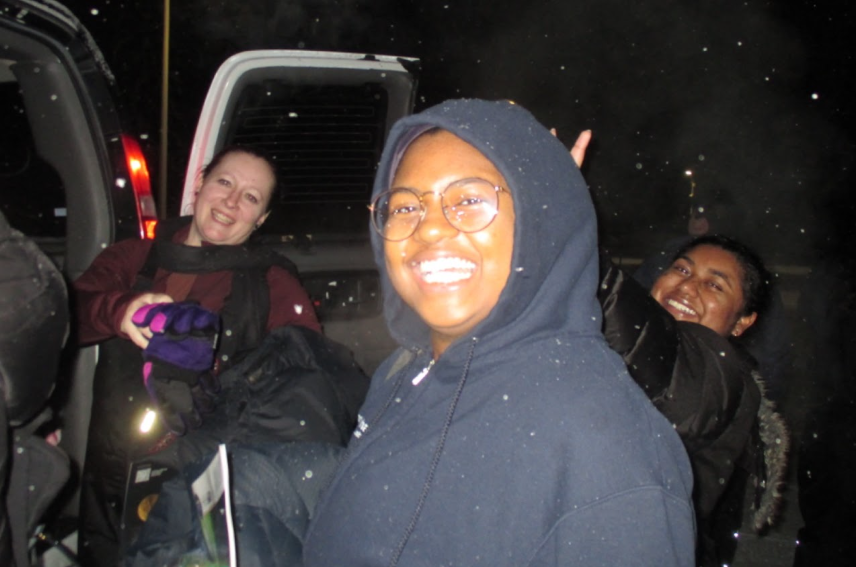
There is something uniquely profound about meeting new people in an unfamiliar place, all of whom are deeply dedicated to a craft they believe in with unwavering conviction. Such experiences are rare, yet they offer an opportunity to grow together in ways that challenge our thinking and foster our development into more responsible, professional, and driven individuals. To describe this dynamic more simply, it feels fluid—an ongoing process of adaptation, problem-solving, and collaboration. While we strive to plan, we recognize the inevitability of surprises. This is not something I had ever encountered in a research setting. More often, research environments feel rigid and fixed, resistant to change. But here, we shifted our thinking, confronted challenges, and found solutions.
—Jeffrey
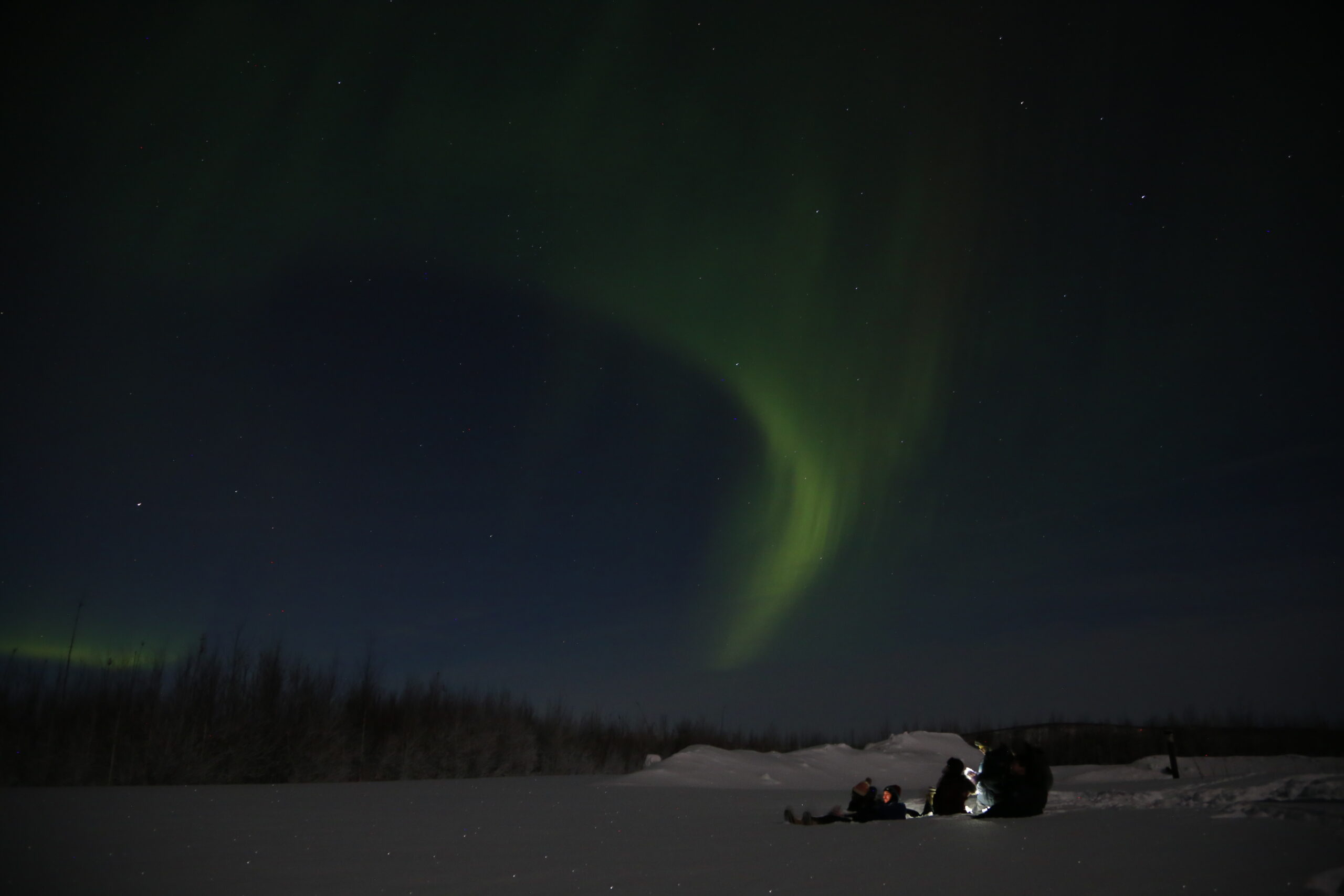
There is nothing I have seen that is more beautiful than when I look at my field team gathered together to share–more than just a meal–but our souls with one another. Whether we are hiking a snow trail to measure ice thickness at Smith Lake or studying the stars on Cleary Summit, the best part about these expeditions is who I wander with.
From the center of the sun, to the center of the soul, science facilitates our connection to the universe, and thus one another…. The aurora chase us, and we chase them right back. We tell stories to explain them, and science is a story that they tell us.
I have a poster in my dorm room that quotes a biology student named Sarah from Kenyon College: “Science is the process of telling stories about the world: here’s something you didn’t know, here’s how you figured it out, and here’s what you learned. The way you communicate that is how you move the work forward. What you know isn’t worth knowing unless it’s shared with others.”
—Amehja
The scientific process of learning about our world is both interdisciplinary and deeply personal. Curiosity and love for a subject both advances the field and fulfills deeply: a reciprocal relationship. Applying those ideas to other parts of life can be tremendously rewarding. We hope you enjoyed these flashes of wisdom. Stay tuned for more to reflect on from our Winter Field School students!
The Winter Field School was a supplement to the Eclipse Ambassadors program, and was led by Aurorasaurus and the Astronomical Society of the Pacific.


