Skip to content

Auroras

A young man works on an enclosed camera that points toward the horizon

“What if North Dakota had its own aurora camera?” 

Meet the North Dakota Dual Aurora Cameras (NoDDAC)! This project is led by university student and Aurorasaurus Ambassador Vincent Ledvina in collaboration with Aurorasaurus, the University of North Dakota (UND), and LiveAuroraNetwork. Using both a north-facing and an allsky camera, NoDDAC provides aurora chasers with live views of the night sky from North Dakota. During… Read More »“What if North Dakota had its own aurora camera?” 

Two photos show wavelike auroral "dunes"

The discovery of the auroral dunes: How one thing led to another

Guest blog post. Dr. Minna Palmroth is Professor of Computational Space Physics and the Director of the Finnish Centre of Excellence in Research of Sustainable Space at the University of Helsinki, Finland. On June 15, 2020, Dr. Palmroth gave a presentation to the Aurorasaurus Ambassadors about the discovery of dune aurora, viewable on our YouTube… Read More »The discovery of the auroral dunes: How one thing led to another

A man photographs aurora in the snow. The graphic has the NASA and Aurorasaurus logos, and the quote "I do citizen science with Aurorasaurus because I am fascinated by nature and all of its wonders." - Hugo Sanchez

Chasing the Northern Lights!

Guest post by Aurorasaurus Ambassador Hugo Sanchez One of the things we love about the Aurorasaurus community is the wealth and variety of experience in aurora chasing. Each chaser has unique expertise to share, and while with so many locations around the world no aurora chasing guide is one size fits all, each provides useful… Read More »Chasing the Northern Lights!

A hand opens the 3D Printed Magnetosphere Model, revealing the internal structures

The Earth’s Magnetosphere—3D Printed!

In 2020, Aurorasaurus partnered with NASA’s STEAM Innovation Lab and NASA’s Magnetosphere Multiscale Mission (MMS) to design and create the world’s first 3D printed magnetosphere model. We have just released the beta version (1.0) and are excited for educators, Makers, Subject Matter Experts (SMEs), and the general public to beta test it on printers and… Read More »The Earth’s Magnetosphere—3D Printed!

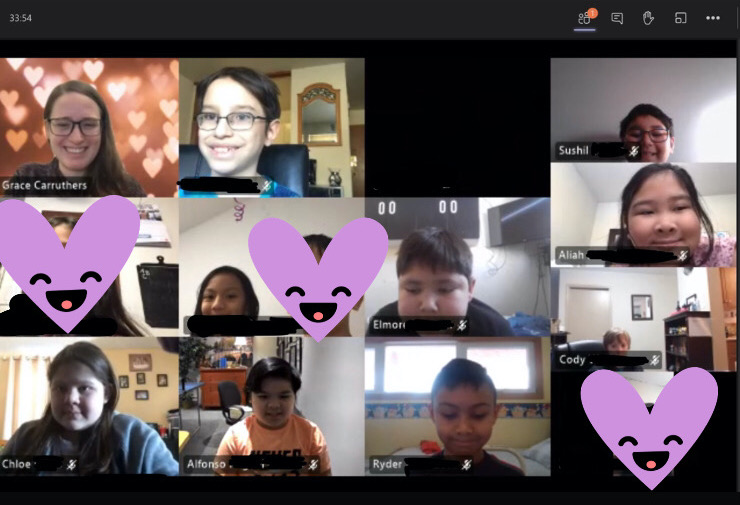
Students smile in a Zoom group screenshot

Asking Questions—Like Scientists!

by Aurorasaurus and Friends Last month we received a letter with some GREAT questions from a class of Manitoba 4th graders! Below we have compiled some answers, along with details and resources for teachers and caregivers to help students dive in further. For some questions, we asked our science and museum colleagues. Scientists know a lot… Read More »Asking Questions—Like Scientists!

Laura's hand (complete with fabulous aurora nail wraps) grips a device like a walkie-talkie

Ham it Up—On the Air!

Amateur Radio for Students and the General Public By Laura Brandt (museum educator), Connie Atkisson (teacher), and Liz MacDonald (scientist) Last fall, Dr. Liz and Laura got their Technician (entry-level) ham radio licenses as part of auditing a class for teachers, grad students, and undergrads on The Physics of Ham Radio taught by Rice University… Read More »Ham it Up—On the Air!

A still image with aurora in the background shows the mauve arc and green "picket fence" features of STEVE

Aurora-Chasing Citizen Scientists Help Discover A New Feature of STEVE

The plucky subauroral phenomenon STEVE (Strong Thermal Emission Velocity Enhancement) has struck again! Teamwork between citizen scientists and scientists Joshua Semeter, Michael Hunnekuhl, Elizabeth MacDonald, Michael Hirsch, Neil Zeller, Alexei Chernenkoff, and Jun Wang, has led to new information and new mysteries about features in STEVE’s dapper green picket fence structure. The team’s work—which includes… Read More »Aurora-Chasing Citizen Scientists Help Discover A New Feature of STEVE

A colorful photo of a flat landscape shows faint green and red aurora pillars

Sharing the story: Aurorasaurus Intern Vince

My backstory with the Aurora and Aurorasaurus The moment I saw my first aurora is forever ingrained in my memory.  The Halloween Storms of 2003 left the night skies above my Minnesota house dancing with green and purple lights, and seeing them at four years old as I walked down my neighborhood street, trick-or-treating with… Read More »Sharing the story: Aurorasaurus Intern Vince

An animation shows how the center slices of each moment in a moving all-sky camera are placed next to each other to create a keogram

Eyes on the Aurora, Part 2: What is a Keogram?

Guest post by Aurorasaurus Ambassador Jeremy Kuzub This article is the second of three about how researchers and citizen scientists record and explore years of auroral activity using all-sky cameras, keograms, and software visualizations. The first post is available here.  Looking Up The first step in aurora borealis research is just looking up at the night… Read More »Eyes on the Aurora, Part 2: What is a Keogram?