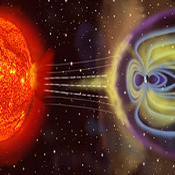
What is the solar wind?
What is the solar wind and what does it have to do with the aurora?
What is the solar wind and what does it have to do with the aurora?
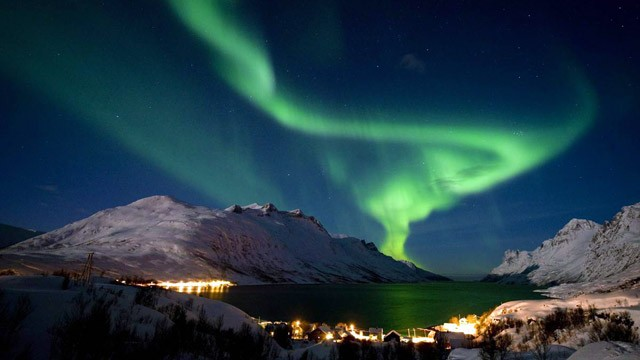
Surveying auroral emissions is a bit like looking at a giant television screen; the picture can help scientists figure out what is happening with energetic particles, and electromagnetic fields, from just above the Earth to far out in surrounding space. et’s talk about the space around our planet and some types of aurora.

On Monday, June 22, 2015 a number of coronal mass ejection (CME) events impacted Earth and, our plots of solar wind power showed a very high likelihood for strong aurora activity on Monday evening and Tuesday morning– and citizen scientists caught all the action!
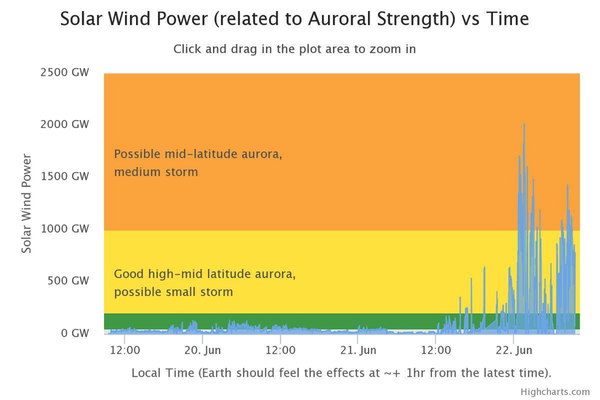
On Friday, two separate CME events were detected and projected to reach the Earth at some point later in the weekend. Be on the lookout tonight for a possibility of strong aurora activity Monday evening/Tuesday morning (June 22nd and 23rd)!

Aurorasaurus intern Sean McCloat explains what he learned by attending an rigorous Space Weather Bootcamp at NASA’s Goddard Space Flight Center in Greenbelt, Maryland.
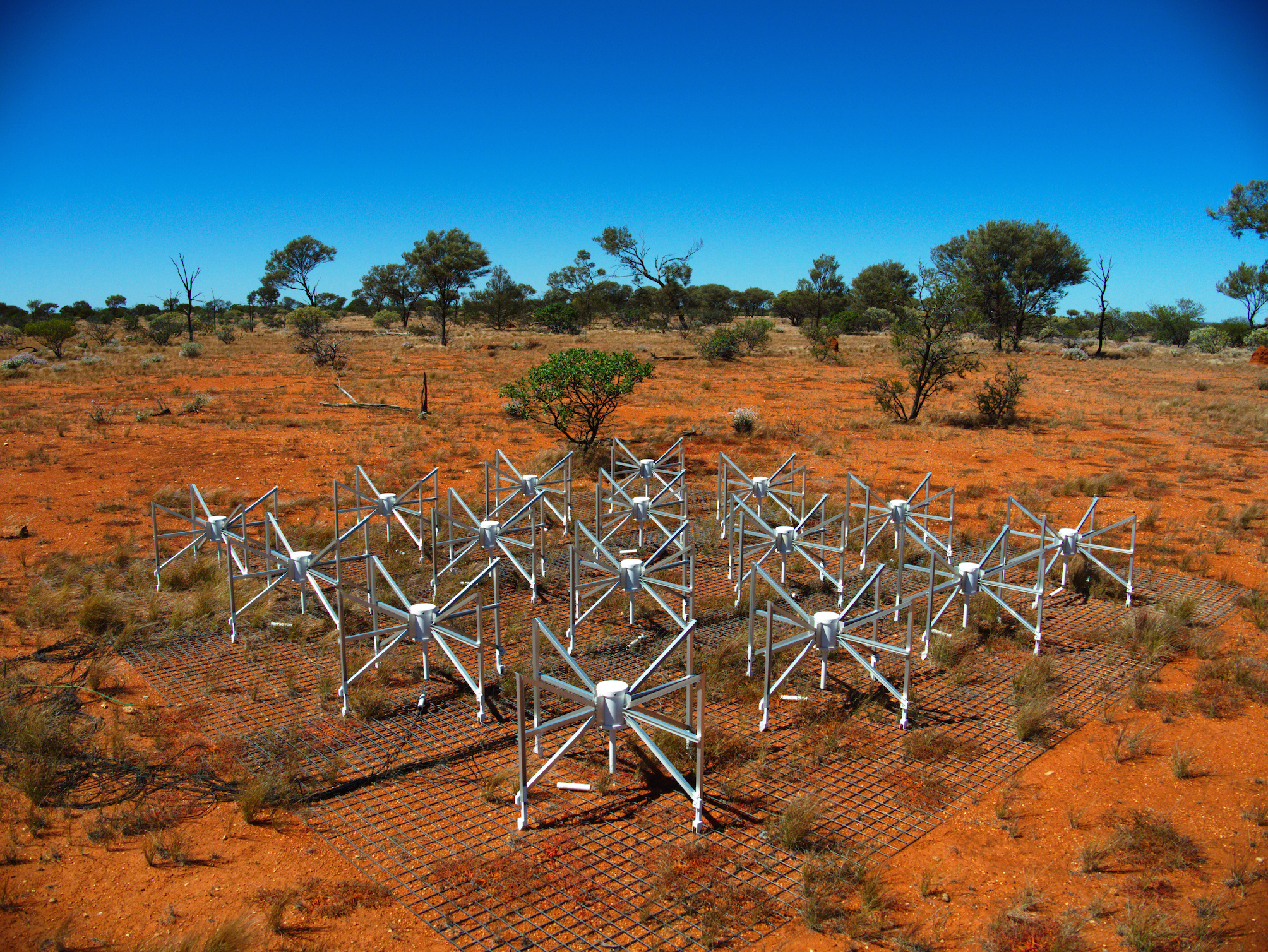
Radio astronomers are gearing up for a new generation of radio telescopes that will be based on radically new design concepts: a wide field of view and a high-fidelity snapshot capability. One such instrument is the Murchison Widefield Array (MWA), a radio telescope in the Australian outback. If such an instrument were to be built at high latitudes, it could provide a radio telescope’s view of auroral activity that could be used to forge a better understanding of what happens to plasma near the Earth during an auroral display.
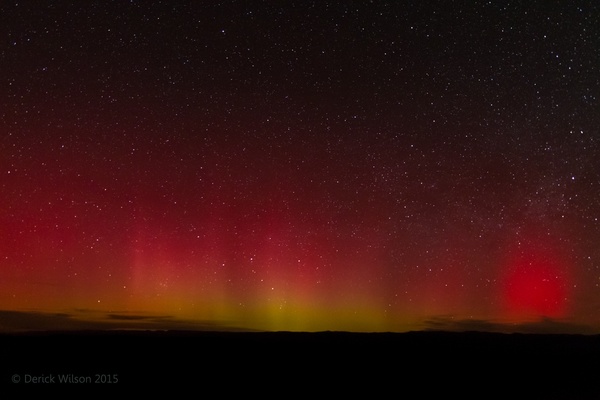
We looked at how Twitter can provide a picture of when, and from where, an aurora can be seen. This study showed that the number of aurora-related tweets correlated well with several different “geomagnetic indices”.
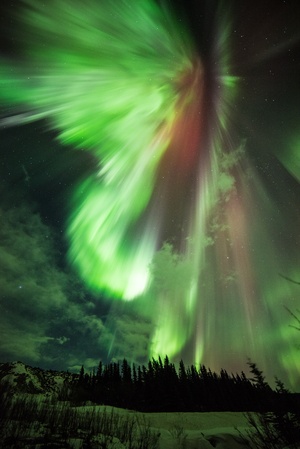
We are excited to launch our new quiz tool, available through the Learn section of the website. Each quiz will feature questions designed to test your knowledge of aurora and Aurorasaurus. You can earn 100 points for passing a quiz! You may already be an aurora expert. But in case you’re not, we’ve included explanations… Read More »Test Your Knowledge with our quizzes!

No two views of the aurora are identical. That is one of the reasons why we like to hear your reports during an aurora. This infographic addresses why the colors may be different when the aurora is overhead rather than on the horizon.
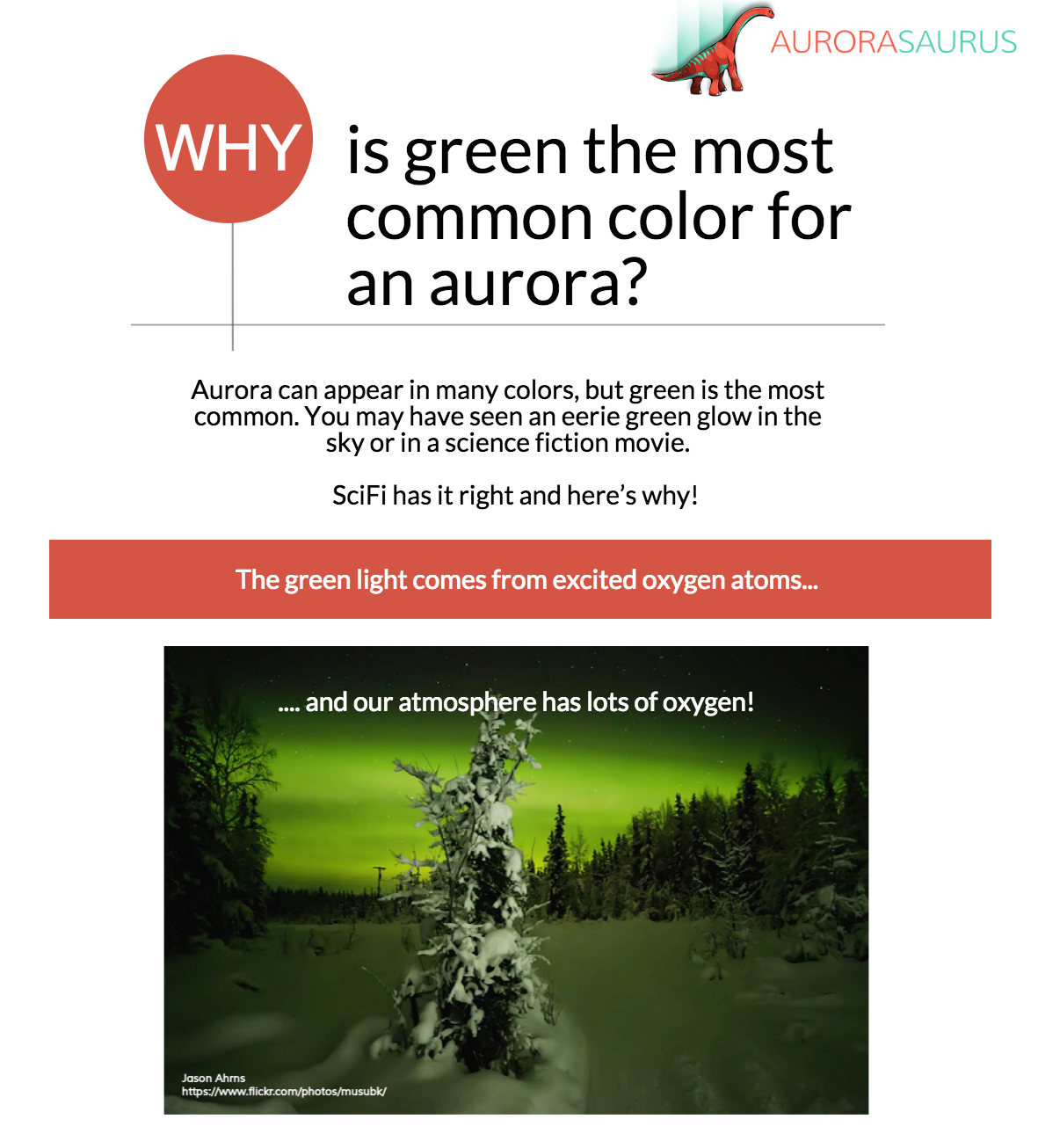
Green is the most common color for an aurora. Do you know why? Check out this infographic to learn why green dominates the aurora.