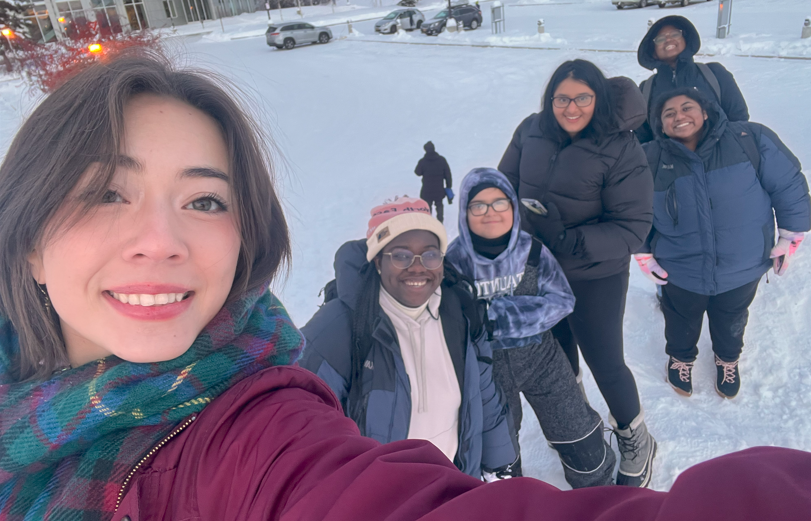
Winter Field School—a culminating experience within the Eclipse Ambassadors program—was a transformative experience for participants, but the learning didn’t stop when they flew home from Alaska. A core tenet of learning to be a scientist is learning to share that science with the public. We conclude this blog post series by showcasing a few of the ways that participants extended the impact of the Winter Field School by sharing heliophysics and their experiences with their communities. This science communication was part of what made the program so special; the students already had experience with this from the Eclipse Ambassadors program and were able to extend that experience with new teachings.
During the 2025 Eclipses to Aurora Winter Field School, students received expert guidance and inspiration on not only sharing science with colleagues but with the general public. Lynda McGilvary from the University of Alaska Fairbanks Geophysical Institute shared cultural connections to science, and Jen Arseneau from the Museum of the North demonstrated proven hands-on activities for sharing science with younger students.
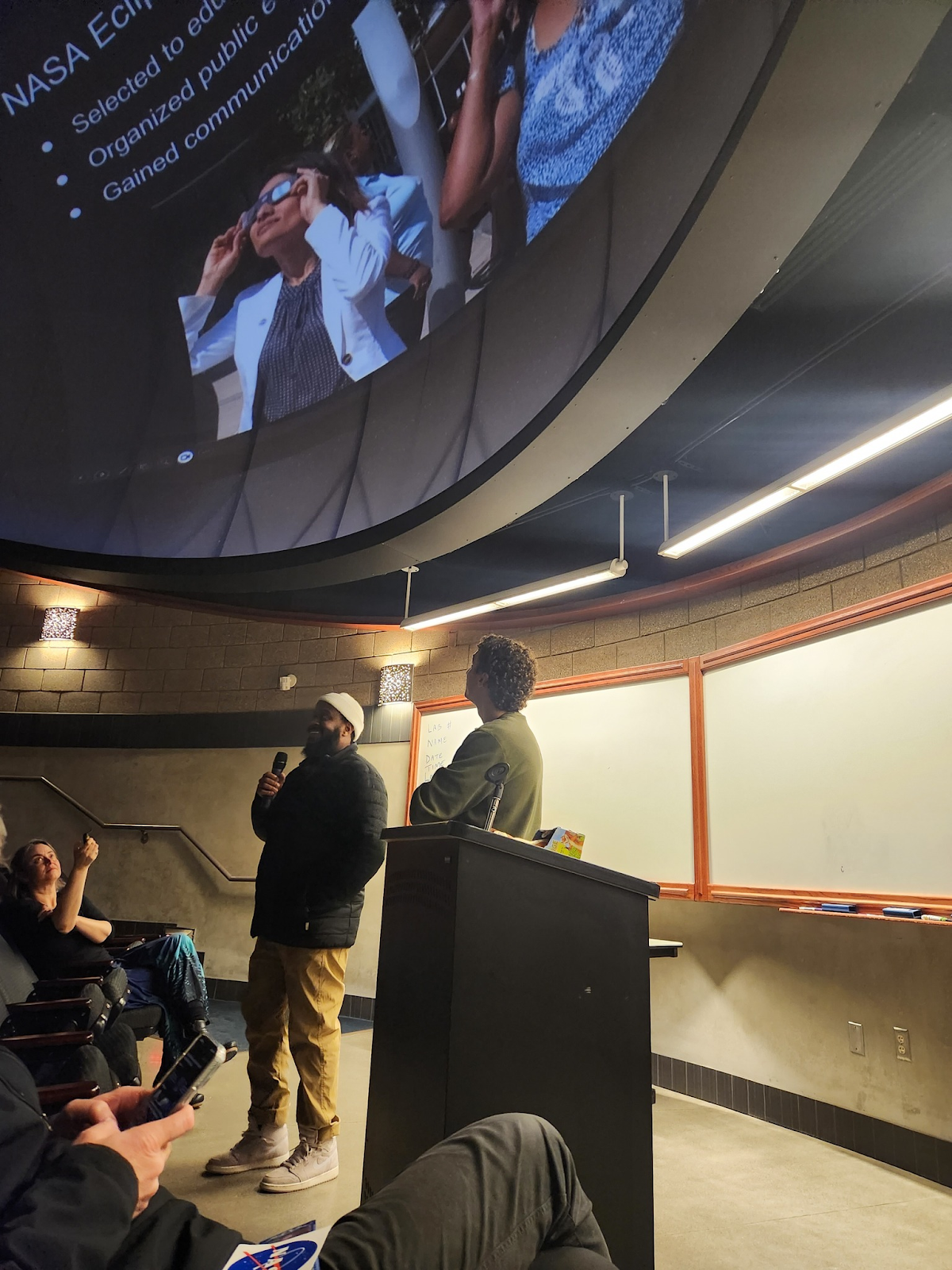
WFS alumnus Kalid and Aurorasaurus postbac Feras teamed up with Dr. Liz and Aurorasaurus Ambassador Prisco Blanco to present a two-session, multilingual educational program at a college planetarium. After an introduction to the science behind the aurora, they shared their experiences with the Eclipse Ambassadors and Winter Field School. They delved into the experience of going to Fairbanks, AK, in the winter—including how cold it was—what it was like to gather scientific data in the field, and how it felt to bond with their cohort. Then, they shared the insights they had gained and how attendees can find opportunities to engage with NASA. Finally, under the large planetarium dome Prisco shared beautiful photographs and insights on chasing aurora locally.

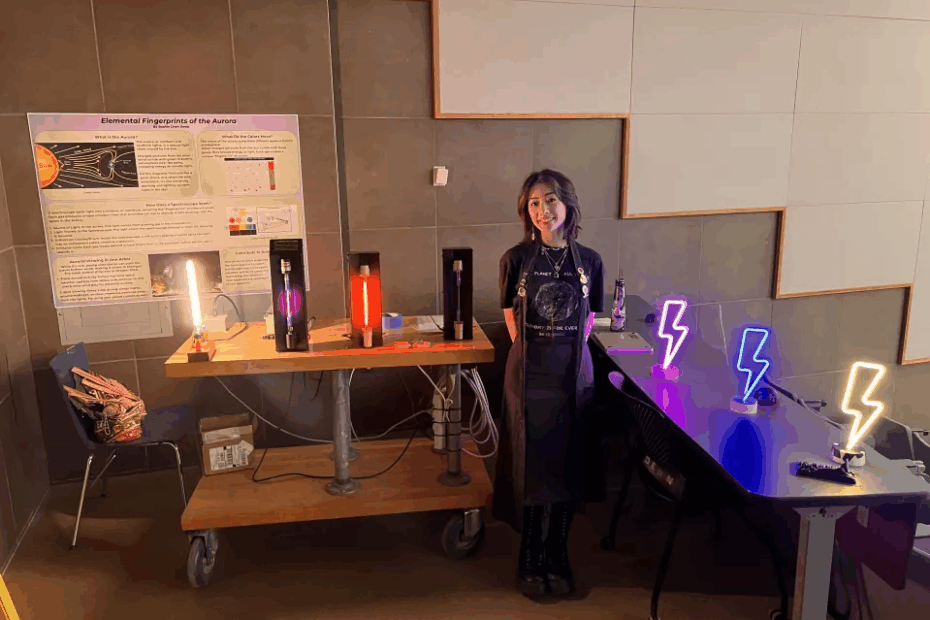
Did you know that different elements shed different wavelengths of light? These wavelengths serve as “fingerprints” that help with identification. The process of viewing and studying these wavelengths is called spectroscopy. During Winter Field School, Sophia was part of a group that built a device called a spectroscope using special materials called diffraction gratings that split light. She later gave a presentation at a Scientist Spotlight event: an NSF-funded natural history museum program for families, during which scientists share their work. She says:
“I guided guests through what causes the aurora, what its colors tell us, and how spectroscopes help scientists identify glowing gases in the atmosphere and beyond. I also highlighted real-time auroral tracking tools like Aurorasaurus and NOAA to make this knowledge feel more applicable to people’s everyday lives. The centerpiece of my table was an emission spectra matching game using elemental discharge tubes and handheld spectroscopes, which helped guests explore the unique ‘light fingerprints’ of gases like oxygen and nitrogen. This connection between physics, space weather, and visual wonder excited participants of all ages!”
In addition, she gave a sound spectroscopy demo and aurora-related optical spectroscopy demo at a special outreach event celebrating the launch of the STEMobile, a mobile STEM education hub aimed at expanding access to science. She is also in the process of developing an aurora-focused planetarium show.
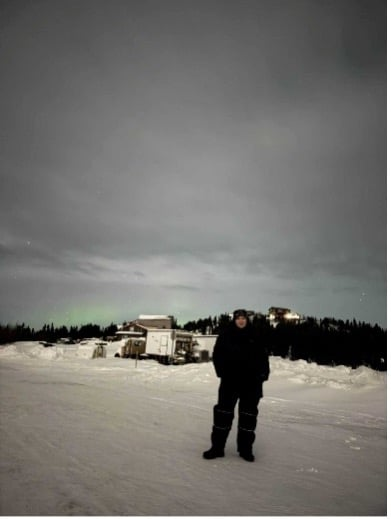
WFS alumna Christy recently gave a Lunch and Learn webinar, put on by her University’s Office of Student and Alumni Affairs. She spoke about her unique perspective, the NASA programs that helped her grow, and her desire to make science easier for everyone to be part of. She concluded, “I am filled with gratitude for the journey that has brought me here. My story is one of perseverance, resilience, and the unwavering belief that dreams are worth pursuing. It is a testament to the power of embracing one’s roots, overcoming obstacles, and advocating for change.”
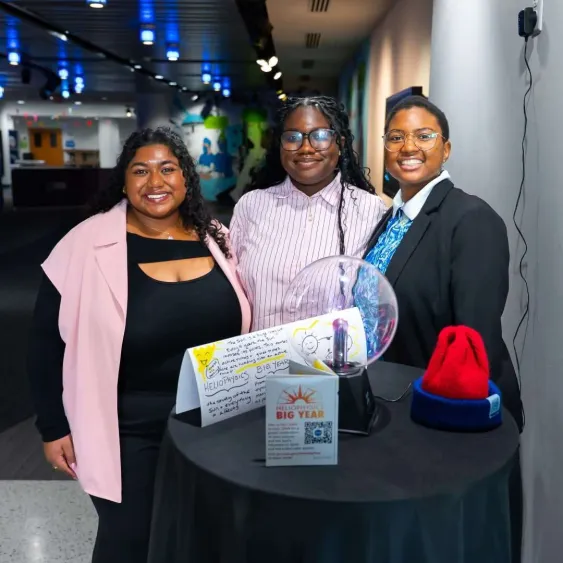
This fall, three Winter Field School alumni, Courtney, Amehja, and Andrea, teamed up for a Liberty Science Center community night, giving presentations throughout the event about auroras, their Winter Field School experiences, and how visitors can maximize their chances of seeing aurora. Resources they shared, pictured above, even included a Heliophysics Big Year zine activity and the Aurorasaurus aurora altitudes hat!
We are so excited about the many ways that this amazing cohort has engaged local audiences across the country with the science of the aurora and their Winter Field School experiences. Thank you for coming on this blog journey with us as we shared their thoughts, insights, and efforts. We are tremendously proud of the WFS alumni and can’t wait to see how they grow and continue to #DoNASAScience in their careers, communities, and daily lives.
The Winter Field School was a supplement to the Eclipse Ambassadors program, and was led by Aurorasaurus and the Astronomical Society of the Pacific.


