Skip to content

citizen science

Red circle with the words "watch and wait" in the middle

When Can I See the Aurora?

Space weather—the everchanging conditions in space, influenced by the Sun—causes a range of different effects on Earth. These happen in many different timeframes for people, technologies, and societies. One such effect is the aurora: the Northern and Southern Lights. Usually, they occur in high-latitude rings around the North and South Poles called auroral ovals, but… Read More »When Can I See the Aurora?

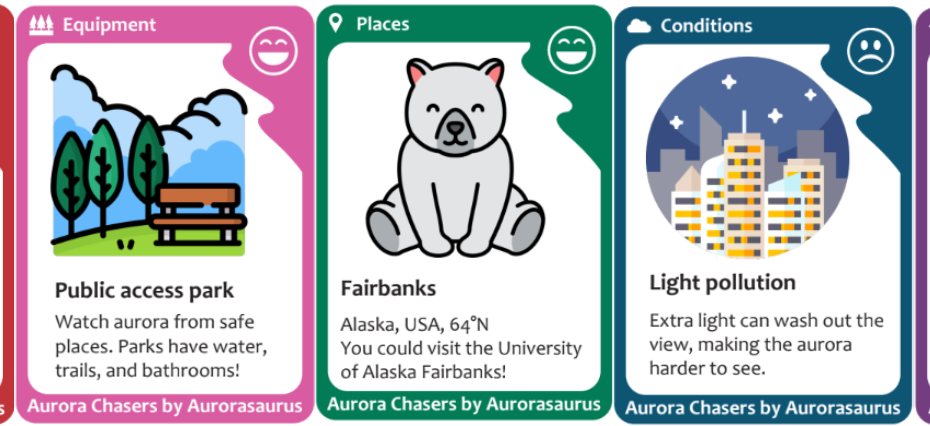
Five cards in a row. 1. Bears! Aurora chsers are guests in wild animals' habitats: practice caution and respect. 2. Public access park: Watch aurora from safe places. Parks have water, trails, and bathrooms! 3. Fairbanks, Alaska, USA 64 degrees North. You could visit the University of Alaska Fairbanks! 4. Light pollution: extra light can wash out the view, making the aurora harder to see. 5. Citizen scientists are seeing aurora. Aurora chasing is best with friends! Get alerts from aurorasaurus.org.

Aurora Chasers: The Game!

One of the questions we get most often is, “how can I see the aurora?” The answer is surprisingly complicated and can be difficult to explain to students. In order to help explain, we made a collaborative, role-playing card game!  With a special deck of printable cards and a dash of imagination, players work together… Read More »Aurora Chasers: The Game!

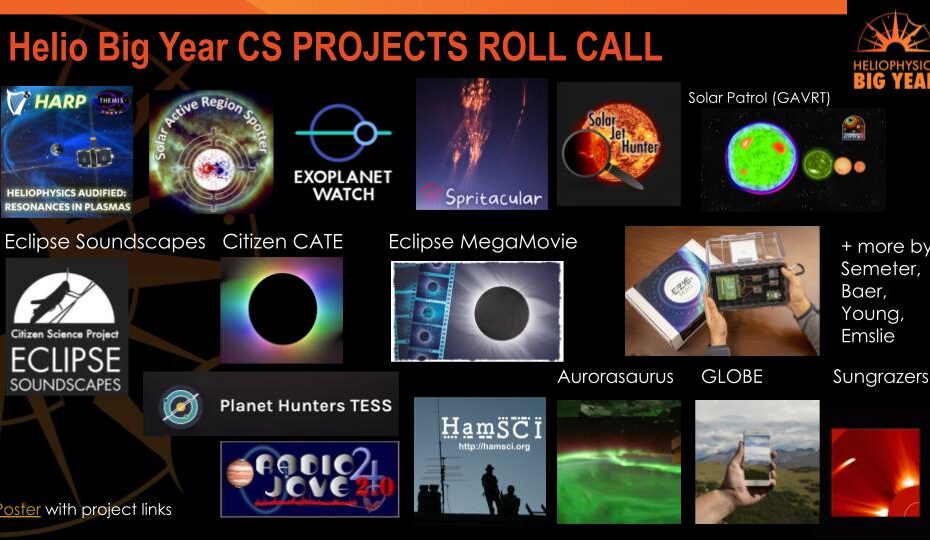
Presentation slide reads "HBY CS Projects Roll Call" and lists projects participating in the HBY

Connecting Senses and Sensors with Solar Science

Guest post by Dr. Liz MacDonald, Sarah Kirn, and Laura Edson As it rises, sets, dances the seasons with the Earth, and sends space weather our way, the Sun is an integral part of our daily lives. Science is one of many ways to get to know our Sun better, and the upcoming year will… Read More »Connecting Senses and Sensors with Solar Science

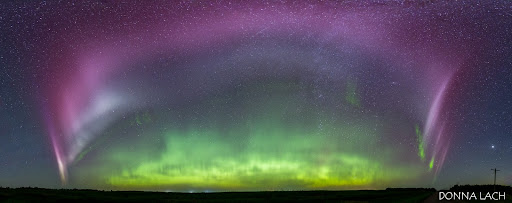
STEVE arcs across the sky of a panorama like a purple rainbow, with green aurora beneath on the horizon.

Celebrating STEVE and You!

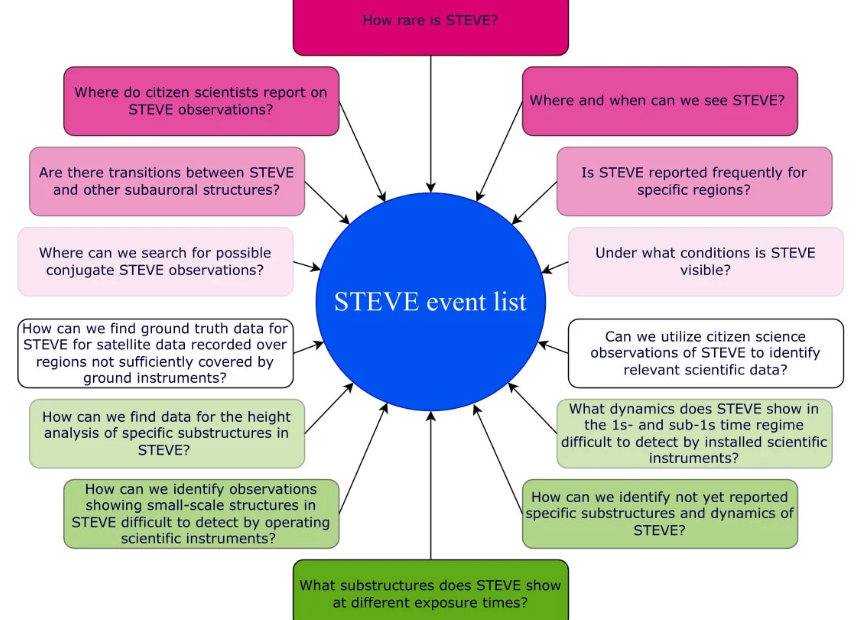
Please excuse the slight delay in posting this while we underwent tech updates on our blog. While our favorite quirky purple arc has been observed for millennia, we want to celebrate one highlight in its relationship with humanity. STEVE (“Strong Thermal Emission Velocity Enhancement”) is a purplish arc with stripy green ray features that runs… Read More »Celebrating STEVE and You!

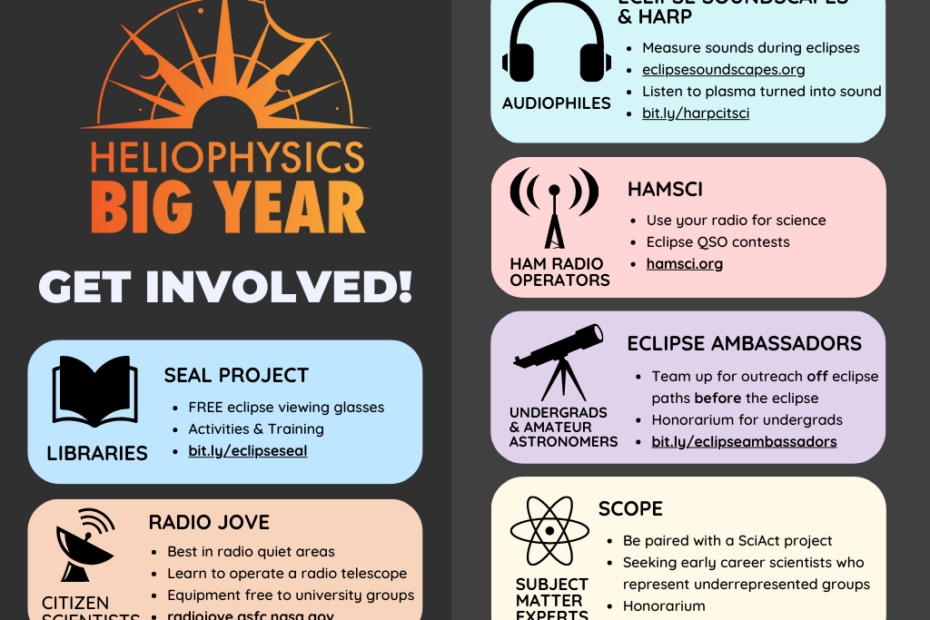
Coming soon: the Heliophysics Big Year

Guest post by Dr. Liz MacDonald The Heliophysics Big Year will celebrate solar science and its connection with our world; Heliophysics itself is the study of our Sun and how it interacts with everything in our solar system. Inspired by the “Big Year” concept in birding, this will be a personal quest to experience and… Read More »Coming soon: the Heliophysics Big Year

Meeting STEVE Around the World

Citizen scientists can not only contribute to discoveries, but they can also bring their unique skills to bear to make discoveries of their own and create powerful tools to advance open science. Dr. Michael Hunnekuhl is one such innovator.  Among atmospheric phenomena, STEVE (which stands for “Strong Thermal Emission Velocity Enhancement”) is one of those… Read More »Meeting STEVE Around the World

Small Words, Big Ideas: Up Goer Five

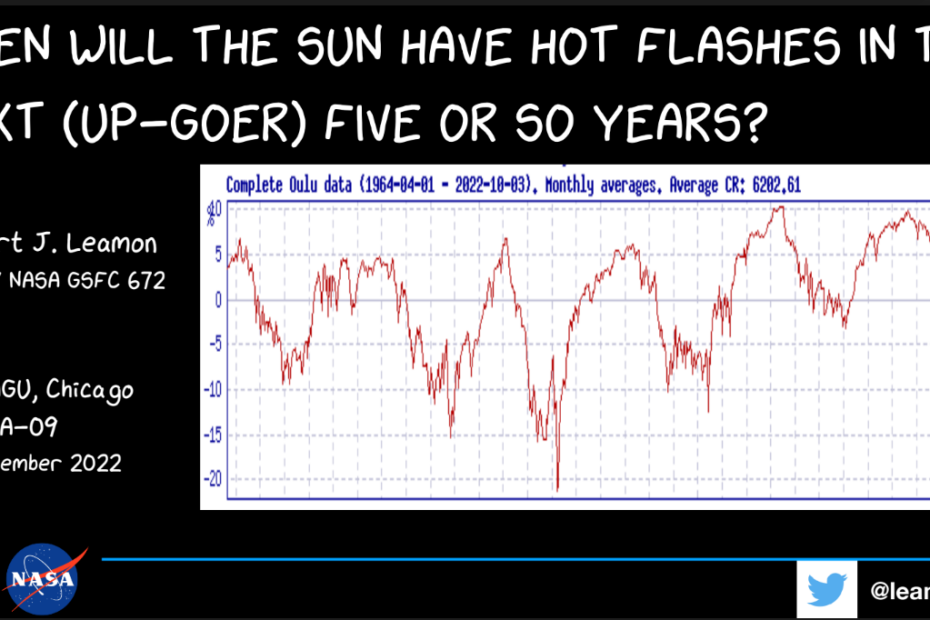
Every community of practice evolves its own vocabulary, and scientists and science communicators often rib themselves for how jargony STEM can be. In the late 1970’s, tech film narrator Bud Haggert created the affectionately cheeky “Turbo Encabulator“, using plausible but made-up jargon to make this classic engineering sketch incomprehensible. Engineers have delighted in recreating and… Read More »Small Words, Big Ideas: Up Goer Five

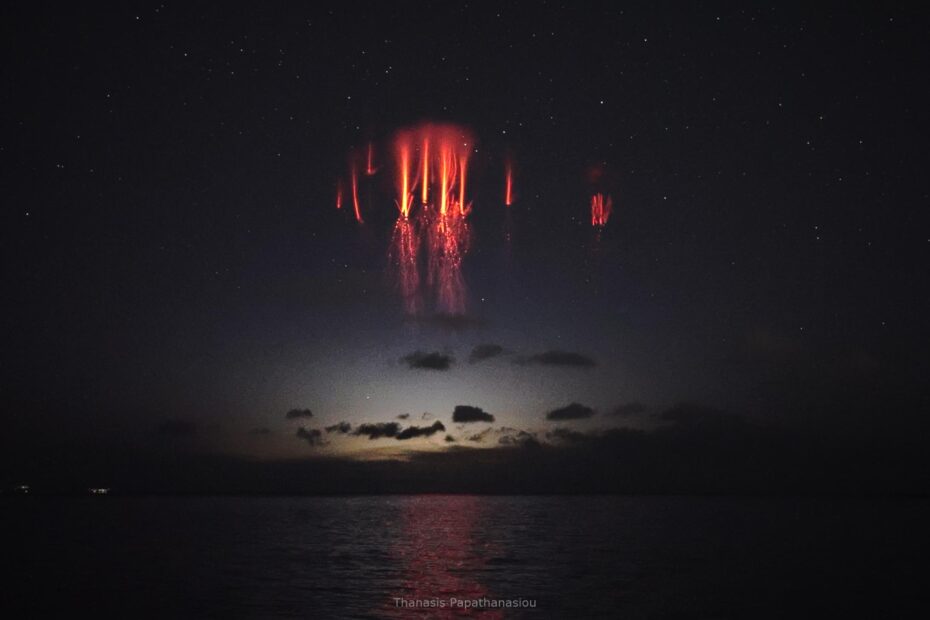
The center of a black background is illuminated. Clouds and a horizon are visible, but above them are sprites, appearing like bright red carrots with branching roots at the tips, buried in the night sky.

Sprites: The Aurora’s Flashy Cousins

They dance above the clouds but below the aurora, crimson fingers stretching up and down, bursting like fireworks then vanishing in the blink of an eye. Sprites, brief flashes of red and purple light associated with lightning, are some of the least-understood electrical phenomena in the Earth’s upper atmosphere. Even though globally there are 30-100… Read More »Sprites: The Aurora’s Flashy Cousins

Negative Aurora Reports Are a Plus For Science!

There’s nothing quite like the disappointment when a promising CME fizzles out, or when clouds obscure the sky during a magnificent aurora display (we feel for you in the Pacific Northwest!) Experienced aurora chasers point out that such fickleness is part of the excitement, and that’s true! The reason that the question “when can I… Read More »Negative Aurora Reports Are a Plus For Science!

What Is Discrete Aurora? (It’s Not Discreet!)

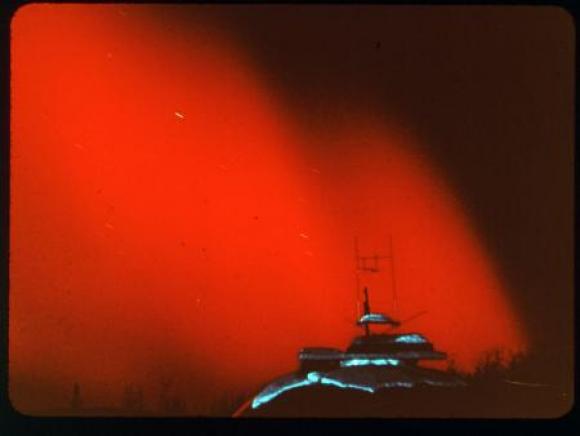
While “discreet” means something that is a little bit secretive or unobtrusive, “discrete” auroras are distinct, bright, narrow bands—most commonly, photos of auroras are of this type. They typically have a definite lower border and can stretch high into the sky, like curtains, when viewed from the side. From below they are very narrow. They… Read More »What Is Discrete Aurora? (It’s Not Discreet!)