Skip to content

northern lights

Above buildings, strawberry-red aurora fills the sky like the glow of fire

Why do auroras at lower latitudes look red?

With special thanks to Dr. Janet Kozyra for her generous contributions to this post. After a big storm sends aurora to lower latitudes—southward in the Northern Hemisphere, and northward in the Southern Hemisphere—questions abound. One of the most common is “I thought the aurora was green. Why does it look red?”  Red auroras have been… Read More »Why do auroras at lower latitudes look red?

A still image with aurora in the background shows the mauve arc and green "picket fence" features of STEVE

An Aurora Family Reunion

As loved ones gathered to celebrate the winter holidays, we were thinking about the many relationships between aurora and aurora-like phenomena in the sky. In this post, we introduce the aurora and some of the amazing phenomena related to it, closely or distantly. If you have a photo and wonder which phenomena might be present… Read More »An Aurora Family Reunion

Smokelike green streaks across the sky crisscross one another in squares in front of silhouetted trees.

Keeping it Real: How to Spot a Fake Aurora Photo

By Vincent Ledvina and Laura Edson With many thanks to aurora photographer Marybeth Kiczenski for reviewing the post As artificial intelligence (AI) becomes more popular, many are using it to create content, including about auroras. While it can be useful, in a social media world that values speed, clicks, and engagement it can be hard… Read More »Keeping it Real: How to Spot a Fake Aurora Photo

Red circle with the words "watch and wait" in the middle

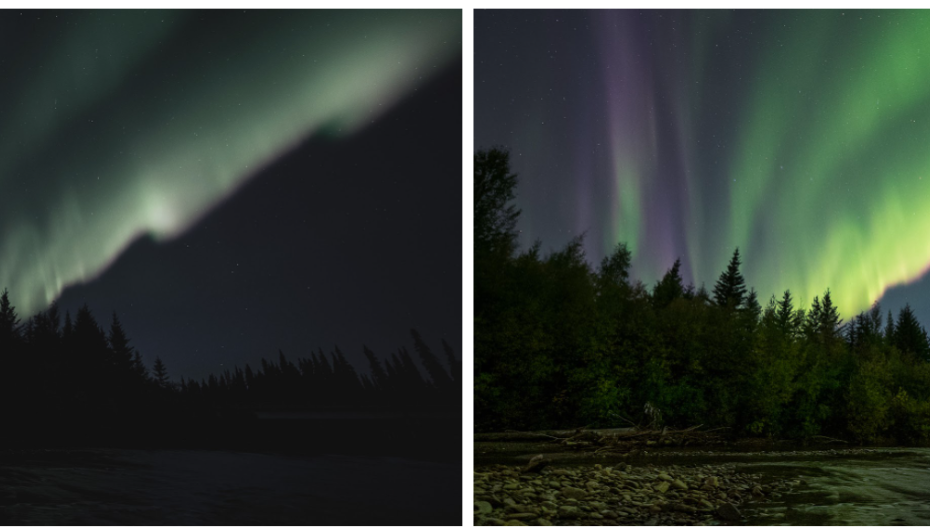
When Can I See the Aurora?

Space weather—the everchanging conditions in space, influenced by the Sun—causes a range of different effects on Earth. These happen in many different timeframes for people, technologies, and societies. One such effect is the aurora: the Northern and Southern Lights. Usually, they occur in high-latitude rings around the North and South Poles called auroral ovals, but… Read More »When Can I See the Aurora?

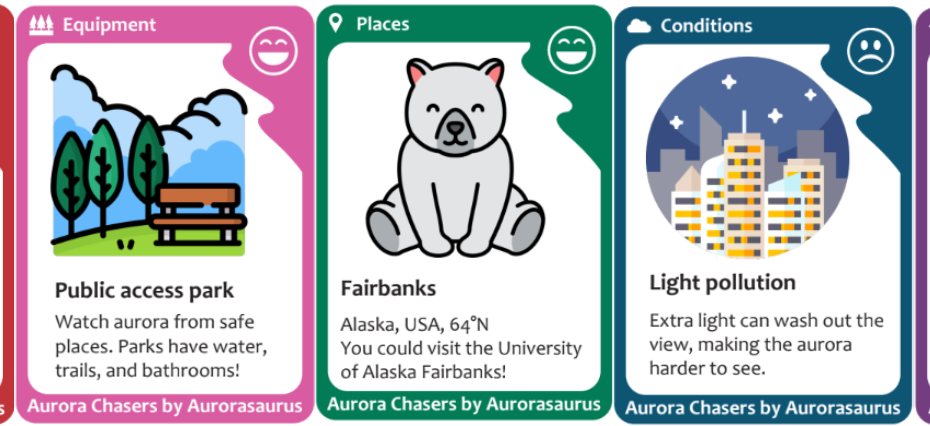
Five cards in a row. 1. Bears! Aurora chsers are guests in wild animals' habitats: practice caution and respect. 2. Public access park: Watch aurora from safe places. Parks have water, trails, and bathrooms! 3. Fairbanks, Alaska, USA 64 degrees North. You could visit the University of Alaska Fairbanks! 4. Light pollution: extra light can wash out the view, making the aurora harder to see. 5. Citizen scientists are seeing aurora. Aurora chasing is best with friends! Get alerts from aurorasaurus.org.

Aurora Chasers: The Game!

One of the questions we get most often is, “how can I see the aurora?” The answer is surprisingly complicated and can be difficult to explain to students. In order to help explain, we made a collaborative, role-playing card game!  With a special deck of printable cards and a dash of imagination, players work together… Read More »Aurora Chasers: The Game!

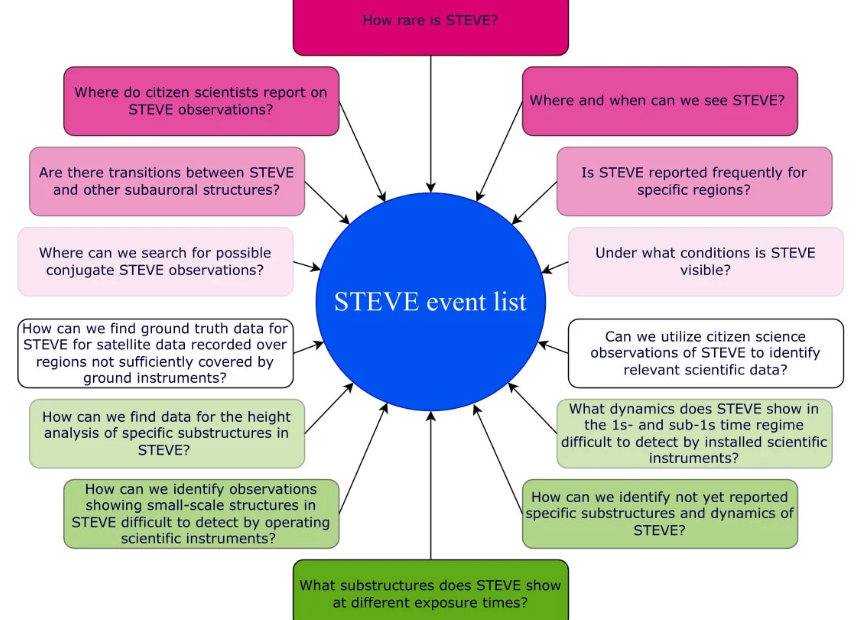
Meeting STEVE Around the World

Citizen scientists can not only contribute to discoveries, but they can also bring their unique skills to bear to make discoveries of their own and create powerful tools to advance open science. Dr. Michael Hunnekuhl is one such innovator.  Among atmospheric phenomena, STEVE (which stands for “Strong Thermal Emission Velocity Enhancement”) is one of those… Read More »Meeting STEVE Around the World

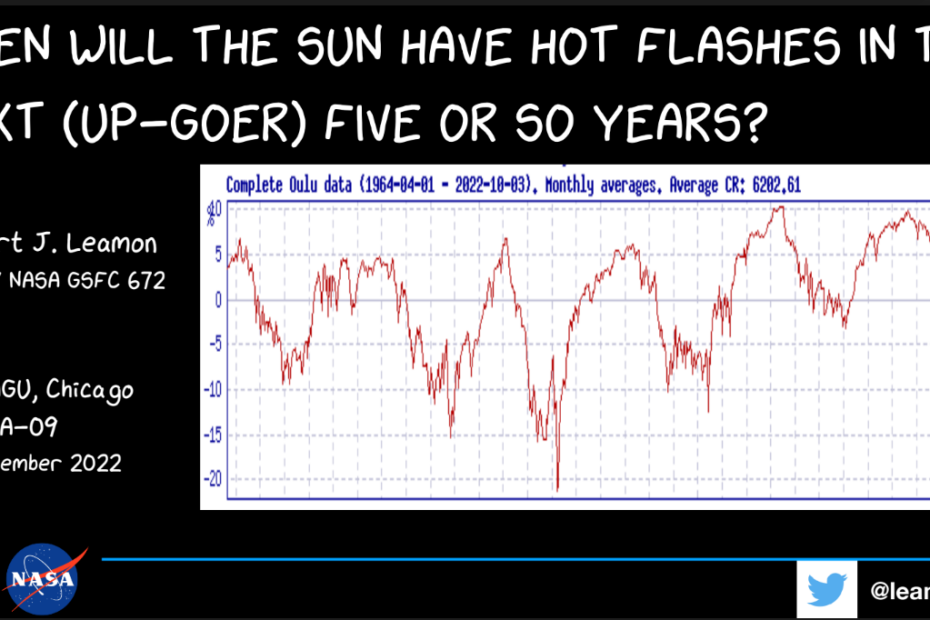
Small Words, Big Ideas: Up Goer Five

Every community of practice evolves its own vocabulary, and scientists and science communicators often rib themselves for how jargony STEM can be. In the late 1970’s, tech film narrator Bud Haggert created the affectionately cheeky “Turbo Encabulator“, using plausible but made-up jargon to make this classic engineering sketch incomprehensible. Engineers have delighted in recreating and… Read More »Small Words, Big Ideas: Up Goer Five

Relationship With the Sun

Since time immemorial, humanity has developed a deep and multifaceted relationship with our nearest star. While each culture expresses that bond in its own way, humans share millennia of solar observation. The Sun makes life on Earth possible, and its ever-changing nature affects our daily lives. What does the Sun mean to you? In Kiuġuyat:… Read More »Relationship With the Sun